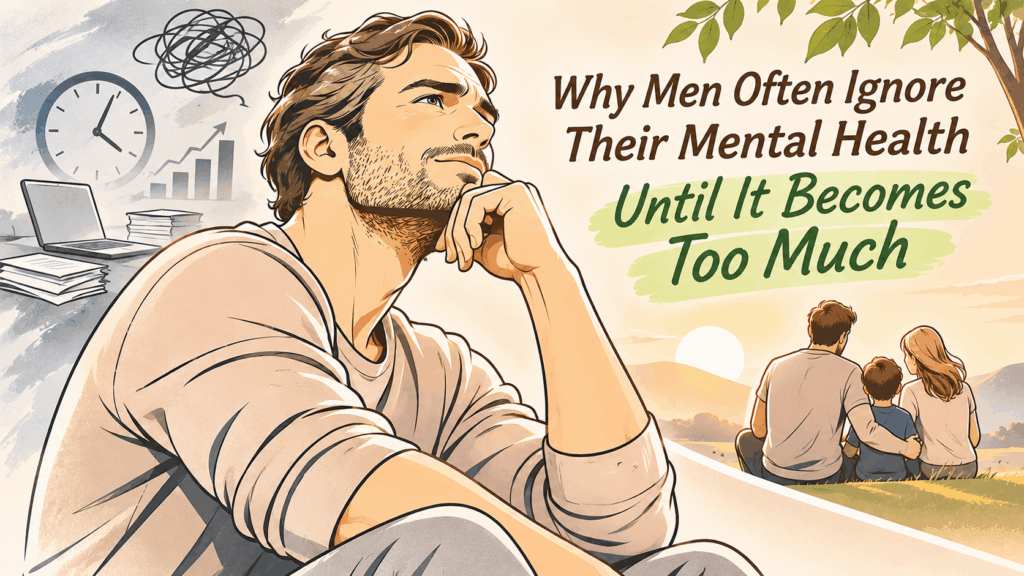
Why Men Often Ignore Their Mental Health Until It Becomes Too Much
“I’m fine. Just tired.”
How many times have you heard a man say this? Or perhaps you have said it yourself. After a long day at work, he comes home, sits on the sofa, turns on the television, and finally gets a moment to himself. He doesn’t feel like talking. He doesn’t want to go anywhere. Maybe he opens a beer, orders something for dinner, and hopes tomorrow will be a little easier.
There is nothing unusual about having a difficult day. Everyone needs time to switch off.
But what happens when one difficult day becomes another, and then another? When the things you used to enjoy no longer sound appealing? When you are constantly tired, easily irritated, and have less patience for the people around you?
For some men, this is how mental health problems begin to affect everyday life. Quietly, without an obvious moment when something suddenly goes wrong.
And because they are still going to work, paying the bills, and taking care of their responsibilities, they assume everything is fine.
Why Men Find It So Difficult to Admit They Are Struggling
From an early age, boys often hear that they should be strong, independent, and capable of handling difficult situations. As adults, those expectations do not simply disappear. A man may feel responsible for supporting his family, solving problems at work, growing in his career, earning enough money, and being the person everyone else can rely on.
And when he starts struggling himself, admitting it can feel uncomfortable.
Some men worry that talking about stress or anxiety will make them appear weak. Others simply do not know how to explain what they are feeling. They have spent so many years dealing with problems privately, hiding their emotions behind masks, that asking for help feels unfamiliar.
Of course, not every man experiences this. Plenty of men speak openly about their emotions and take good care of their mental health. But for those who have learned to keep everything inside, problems can remain unnoticed for a long time.
Stress Doesn’t Stay Only in Your Head
One thing that is easy to underestimate is how closely mental and physical health are connected.
Think about a particularly stressful week. You sleep is bad and you wake up tired- and the whole coffee you drink makes you feel asleap, instead of waking you up. Your shoulders feel tense. Concentrating at work becomes harder. By the evening, you have little patience left and even less desire to exercise.
Now imagine that week continuing for several months.
Long-term stress can affect sleep, appetite, blood pressure, digestion, and energy levels. Some people experience frequent headaches or muscle tension. Others become more irritable, lose interest in their hobbies, or simply stop enjoying things they used to look forward to.
And there is another consequence that often goes unnoticed: weight gain. Poor sleep can affect appetite regulation and the way your body uses energy. You may feel hungrier during the day, crave more calorie-dense foods, or find it harder to feel satisfied after a meal.
At the same time, exhaustion starts changing your everyday habits. Perhaps you used to play football with friends every weekend. Or go swimming after work. Maybe you enjoyed cycling, walking, or doing a short workout at home? Then work became busier. Family responsibilities increased. You started feeling tired more often. Skipping one workout seemed reasonable. Then another. Eventually, exercising stopped being part of your week altogether.
Eating habits may change too. Cooking dinner feels like another task after an already exhausting day, so takeaway becomes more convenient. A beer or two in the evening starts feeling like the easiest way to relax. Snacks appear while watching television, even when you are not particularly hungry.
Weeks pass. Physical activity decreases, food choices change, alcohol becomes more frequent, and the extra calories begin adding up.This is how prolonged stress can contribute to weight gain. Not necessarily because someone deliberately decides to eat more or stop exercising, but because their daily life has gradually changed.
We explored how stress, tiredness, and emotions can influence eating habits in What Your Food Cravings Are Trying to Tell You .
The difficult part is that these changes can become so familiar that you stop noticing them. You may blame your age, your metabolism, or your lack of discipline without considering how much stress has affected your everyday life.
Of course, changes in eating habits or physical activity do not automatically mean someone has a mental health condition. But when they happen alongside persistent sadness, irritability, anxiety, or loss of interest, they may be signs that something needs attention.
And if you constantly feel exhausted despite getting enough rest, do not simply accept it as a normal part of working hard or getting older. Persistent fatigue can have several causes, including physical health conditions, and deserves medical attention.
Can Exercise Help When You Feel Mentally Exhausted?
To be honest, after a stressful day, exercise may be the last thing you want to think about. You have spent hours solving problems, answering messages, dealing with people, and making decisions. By the time you get home, the sofa looks much more appealing than your trainers.
But physical activity can help with stress, mood, sleep, and overall mental well-being. It does not have to be a demanding gym session. For example, try taking a 15-minute walk after work before going home. Leave your phone in your pocket and give yourself a little time away from emails, traffic, and conversations about work.
If you spend most of the day sitting, a short home strength session two or three times a week can help maintain muscle strength and physical fitness. Chair squats, wall push-ups, resistance-band exercises, and gentle mobility work are possible starting points. And if you miss spending time with friends, consider making activity social again. A weekend bike ride, swimming session, or casual game of football may feel more enjoyable than another workout you have to complete alone.
There will also be evenings when ten minutes is all you can manage. That is fine. We explored shorter options in Micro Workouts: Do They Really Work? .
Exercise should not become another responsibility that makes an already difficult day feel worse. Choose something appropriate for your fitness and health, and allow yourself easier days when needed. Physical activity can support mental well-being, but it is not a replacement for professional treatment when someone is experiencing depression, significant anxiety, or another mental health condition.
Try a Seven-Day Check-In With Yourself
You do not need to change your entire life next Monday. But you can spend one week paying closer attention to how you actually feel.
Start by choosing one activity you genuinely enjoy. It might be walking after dinner, swimming, cycling, or doing a short home workout. Find time for it on a few days during the week.
Then look at your evenings. Are you going to bed at a reasonable hour? Are you eating because you are hungry or because you are exhausted? Has alcohol become your usual way to relax?
Try spending at least one evening doing something you have been postponing for yourself. Meet a friend. Go for a walk with your partner. Return to an old hobby. Spend an hour without work messages.
At the end of the week, ask yourself a few questions.
Did I sleep better? Did I enjoy anything this week? Was I less irritated? Did moving help me feel better? Have I been avoiding people or activities I used to enjoy?
You may discover that some small changes help. You may also notice that your stress, sadness, or exhaustion has been affecting you more than you realised. This is not a test for depression or anxiety, and seven days cannot tell you whether you have a mental health condition. It is simply an opportunity to pay attention to things that are easy to ignore when life is busy.
If you want to return to regular physical activity but find it difficult to organise your workouts, our 30-Day Home Transformation Program offers short, guided home sessions and a gradual structure. It is a fitness program, not a treatment for mental health conditions.
When It’s Time to Ask for Help
Everyone has difficult days. Feeling stressed, frustrated, or tired occasionally does not automatically mean something is wrong. But when those feelings persist, begin affecting your relationships, interfere with work, or take away your interest in everyday life, it is worth talking to someone.
Depression in men does not always look like obvious sadness. It can also involve irritability, anger, withdrawal, sleep problems, difficulty concentrating, or losing interest in activities that once felt enjoyable. A conversation with someone you trust can help identify what is happening and what kind of support may be appropriate.
Sometimes saying, “I haven’t been feeling like myself lately” is enough to begin the conversation.
Frequently Asked Questions
Why do men sometimes hide stress or emotional problems?
Some men grow up believing they should handle problems independently or avoid showing vulnerability. This can make discussing stress, anxiety, or depression more difficult, although attitudes and experiences vary widely.
Can stress affect a man’s physical health?
Yes. Persistent stress can affect sleep, appetite, concentration, blood pressure, and everyday energy levels. It can also influence habits such as eating, drinking alcohol, and physical activity.
Can exercise help improve men’s mental health?
Regular physical activity can help reduce stress and support mood and sleep. Walking, swimming, cycling, and manageable strength workouts are good options, but exercise should not replace professional care when it is needed.
How can I support a man who seems constantly stressed or withdrawn?
Choose a quiet moment, ask how he has been feeling, and listen without immediately trying to solve everything. If the changes continue or become more serious, encourage him to speak with a healthcare professional.
How do I know when stress has become something more serious?
If sadness, irritability, anxiety, exhaustion, or loss of interest continues for weeks or begins interfering with everyday life, it is worth seeking professional advice. You do not need to wait until the situation becomes unbearable.