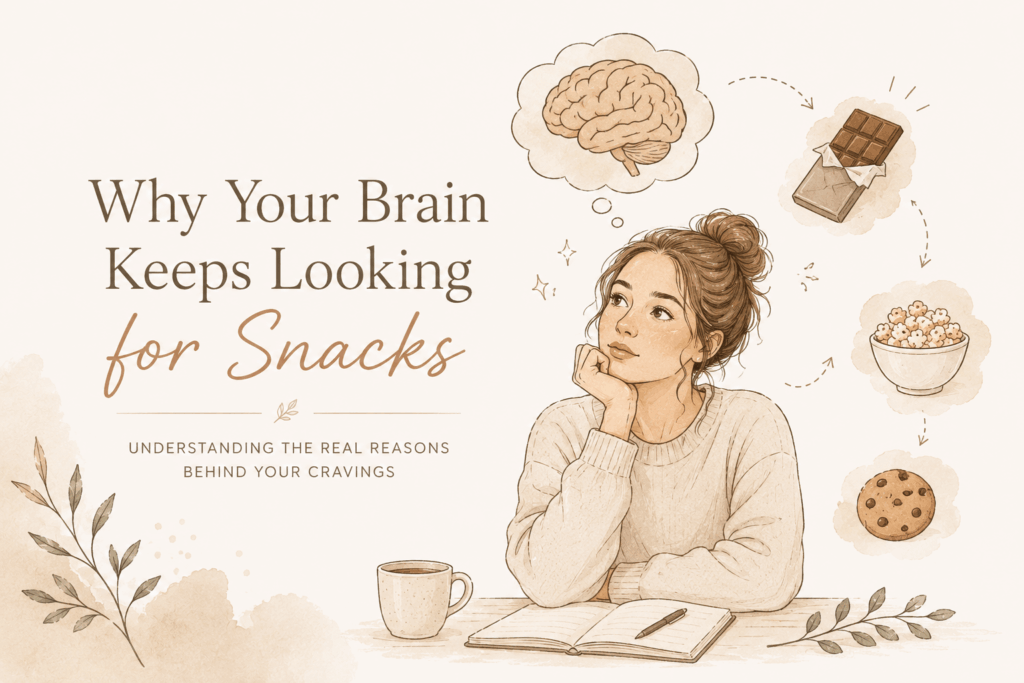
Why Your Brain Keeps Looking for Snacks
Have you ever opened the fridge without being truly hungry? Or started craving something sweet shortly after eating?
In many cases, the body is not actually asking for more energy. The brain is asking for stimulation, comfort, distraction, or relief.
And that is why snacking can feel surprisingly automatic. It is not always about physical hunger. Often it is connected to stress, boredom, mental fatigue, overstimulation, habits, and the modern food environment.
And once you understand how the brain responds to food, those cravings start making much more sense.
Why the Brain Keeps Chasing Rewarding Foods
The brain is constantly scanning for things that feel rewarding, comforting, or stimulating.
A big part of this process involves dopamine, a neurotransmitter connected to motivation, reward, anticipation, and habit reinforcement. As explored in Why Dopamine Matters in Fitness Consistency , dopamine is not only connected to pleasure- it also influences what the brain wants to repeat.
Highly processed foods activate these reward systems very quickly. Foods high in: sugar, salt, fat, artificial flavor combinations, create a much stronger stimulation response than simple whole foods.
That is why the brain rarely says: “I need cucumber.” It usually wants:
- chips
- chocolate
- cookies
- fast food
- ice cream
These foods are designed to feel highly rewarding and easy to continue eating. Brain connects these foods with comfort, stress relief, entertainment, or emotional escape, the more automatic those cravings become.
Why Snack Cravings Often Have Nothing to Do With Hunger
There is an important difference in hunger and cravings. Physical hunger usually builds gradually. While snack cravings often appear suddenly and automatically.
Many people notice them while watching TV, during work breaks, after stressful conversations, late at night, or simply out of boredom.
This happens because the brain slowly starts linking certain situations with comfort, stimulation, distraction, or emotional relief.
Over time, food becomes part of a closed circle:
- stress → snack and coffee
- movie → popcorn and fizzy drink
- mental exhaustion → sugar
- boredom → opening the fridge
- gaming or screens → constant snacking
These patterns become surprisingly automatic.
And they often become even stronger later in the day. After hours of work, decisions, screens, and mental effort, the brain naturally starts looking for something easy and rewarding. That is why evening cravings often feel much stronger than morning cravings.
Fatigue makes this even harder. A tired brain tends to seek quick rewards and immediate comfort, which is exactly what highly processed snack foods provide. This is also one reason improving sleep often reduces cravings more effectively than relying on willpower alone.
A lot of people have experienced this: dinner is over, they are not physically hungry, yet they find themselves opening the fridge, looking through kitchen cabinets, or reaching for something sweet while watching a screen.
Interestingly, many of the foods people snack on do not even feel like real meals. Breadsticks, pretzels, microwave popcorn, chips, roasted and salted nuts, sweetened drinks, and other packaged snacks are often consumed almost automatically. The problem is that these foods are usually easy to overconsume because they combine high calorie density, strong flavor stimulation, and relatively low satiety.
Somethibg else people usually underestimate are the liquid calories. Drinks like cola and other sweetened beverages can provide large amounts of sugar very quickly, while creating much less fullness than solid food.
This is why cravings often continue even when the stomach already feels physically full.
In many situations, the brain is not actually looking for energy. It is looking for stimulation, comfort, distraction, or temporary stress relief. Modern snack foods are designed to deliver exactly that- quickly and repeatedly.
Why Processed Foods Feel So Hard to Stop Eating
Processed foods are not only convenient. They are engineered to keep attention, and make us crave more and more of them.
Food companies carefully combine:
- texture
- salt
- sugar
- fat
- flavor intensity
to create foods that stimulate the brain as strongly as possible.
This is sometimes referred to as the “bliss point”– the combination that makes foods feel extremely rewarding and difficult to stop eating.
That is the reason why:
- one chip rarely feels like enough
- one cookie often becomes several
- snacking can continue without real hunger
The brain keeps chasing stimulation. And because processed foods digest quickly and provide fast reward signals, the cycle tends to repeat again soon after.
Why Food Visibility Changes Behavior
The brain constantly reacts to cues in the environment. Simply seeing food can activate cravings, even without physical hunger.
Research in behavioral psychology shows that visible and easily accessible foods are consumed far more frequently than foods that require extra effort or attention. In simple words- the environment around you quietly shapes eating behavior throughout the day.
For example:
- snacks left on the counter
- open packages nearby
- bowls of sweets or chips
- constant food delivery notifications
- easy access to processed foods
all increase the likelihood of automatic eating.
Oftenly, this often happens without conscious decision-making. You walk through the kitchen. You see snacks. You grab “just a little.” A few minutes later, you repeat it again. The brain starts treating visible food as an available reward opportunity.
Modern environments make this even harder:
- food delivery apps available instantly
- constant food advertising
- large snack portions
- ultra-processed convenience foods everywhere
The brain receives continuous signals to think about food throughout the day. Eating behavior today is influenced by far more than hunger alone all day, everyday.
Sometimes very small environmental changes can reduce automatic snacking significantly:
- keeping snacks out of direct sight
- not leaving open packages nearby
- placing water or fruit in visible areas instead
- reducing food exposure during work or screen time
Because the easier food is to see and access, the more often the brain starts thinking about it- even when the body does not truly need it.
Try a small experiment for one week. Move snacks out of immediate sight and place water, fruit, or other healthier options where you normally see food first. Many people are surprised by how much less often they think about snacking when the visual reminder disappears.
How to Reduce Constant Snacking Without Extreme Rules
Isn’t that the real question? Surprisingly, the answer is usually not “more discipline.”
As explained above, most constant snacking happens automatically, long before people consciously think about it. That is why fighting cravings with pure willpower rarely works for long.
A much more effective approach is reducing how often the brain gets pushed into automatic eating patterns in the first place.
Simple things help: eating enough protein and fiber during meals, avoiding long periods without food, keeping snacks less visible at home, drinking water regularly, and avoiding distracted eating directly from large packages.
One detail people often underestimate is meal structure. A breakfast based mostly on sugar or refined carbohydrates may create a quick energy spike followed by a faster drop in energy and hunger later. On the other hand, meals containing more protein, fiber, healthy fats, and slower-digesting foods usually keep energy and appetite more stable for longer periods. This reduces the constant “searching for something to eat” feeling throughout the day.
It also helps to create a small pause before reacting to a craving.
Ask yourself: “Am I physically hungry, or mentally overloaded?” If you are not sure, wait 10 minutes before making a decision. Drink some water, go for a short walk, stretch, or finish a small task.
Many cravings become noticeably weaker once a little time passes.
And do not underestimate movement. A brief walk, stretching for a few minutes, stepping outside, or simply changing environments can interrupt stress-driven eating patterns surprisingly well.
As we explored in Why Action Reduces Anxiety and Builds Confidence , taking action often reduces mental tension more effectively than people expect.
The goal is understanding what is actually driving the craving before reacting automatically every time.
Frequently Asked Questions
Why do I crave snacks even after eating?
Cravings are often connected to stress, habits, reward pathways, boredom, or mental fatigue — not only physical hunger.
Why are processed foods so hard to stop eating?
Processed foods are designed to strongly stimulate reward systems in the brain through combinations of sugar, salt, fat, and flavor intensity.
Can stress increase snacking?
Yes. Stress and mental exhaustion often increase cravings for highly rewarding foods and reduce impulse control around eating.
How can I reduce automatic snacking?
Simple changes help most: structured meals, more protein and fiber, reducing visible snacks, hydration, and interrupting stress patterns with movement instead of food.
Why do I always want something sweet at night?
Evening cravings are often linked to mental fatigue, stress, habit patterns, and the brain’s search for quick rewards after a long day. This is one reason sweet foods often feel much harder to resist at night than they do earlier in the day.