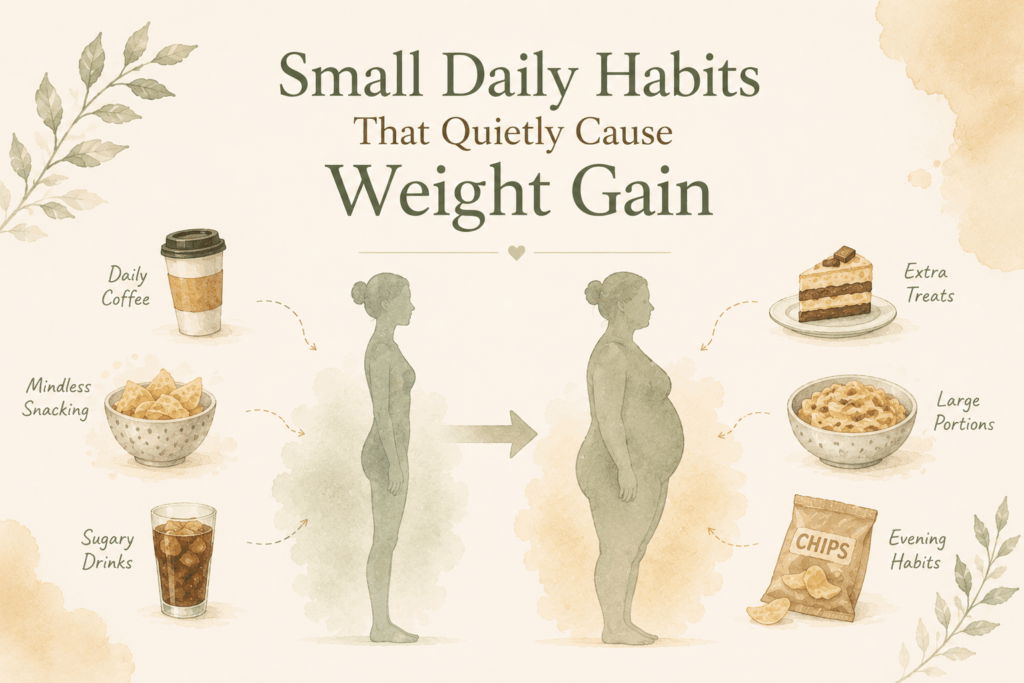
Small Daily Habits That Quietly Cause Weight Gain
I will probably surprise you with the simple fact that most people do not gain weight from one pizza, one dessert or one “bad weekend”. Even if people who have gained weight stubbornly claim it. This cannot happen – the human body is simply designed that way.
Weight gain usually happens much more quietly than that.
A few extra bites while cooking. Late dinners after stressful days. Two or three beers that “do not feel like much.” Constant small snacks that never feel like a real meal. Sitting for hours after eating because the day was exhausting.
None of these things feel dramatic in the moment. But repeated daily or weekly, they slowly start changing:
- energy levels
- hunger patterns
- daily calorie intake
- movement levels
- the way the body feels physically
This is why many people feel confused when weight slowly increases even though they feel like they are “not eating that much.”
The Calories People Drink Without Realizing It
One of the easiest ways to consume far more calories than expected is through drinks. And the problem is that liquid calories usually do not feel as “serious” as food. Moreover, most of the time, we consume them along with the “serious” food.
For example:
- beer during dinner
- sweetened coffee drinks
- cocktails
- soda
- juice
- energy drinks
- alcohol during social evenings
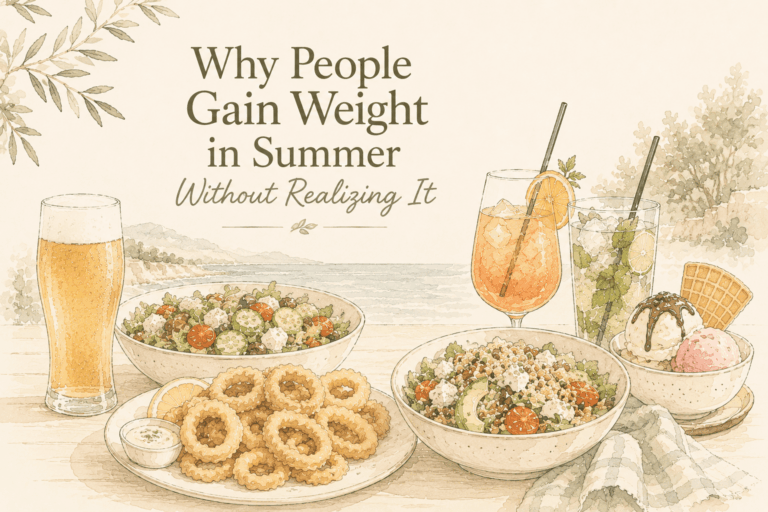
Two or three beers with fried food may feel completely normal during a summer evening. But combined together, the calories quickly become much higher than people realize. Drinking coffee with something sweet is one thing- completely other is if we pour sugar and syrop into the “coffee”- combined it becomes sugar rush. And what is the usual combination in the club for drinking? Energy drink with some sort of hard alcohol.
Beer can also make many people feel more bloated and physically heavy the next morning, especially when combined with salty or fried foods late in the evening.
This does not mean someone can never enjoy alcohol.
But many people genuinely underestimate how strongly drinks affect total calorie intake over time. Especially when we are having some “snacks” with them.
The Food People “Do Not Count”
One of the most common reasons people unknowingly overeat is the food that never feels like a “real meal.” For example:
- small bites while cooking
- finishing leftovers from the table
- snacking before dinner
- grabbing something quickly while stressed
- eating directly from the package
- random sweets during the day
Individually, these moments feel tiny and neglectable. And they are, if you do them once. If they are repeated every day, they quietly add far more calories than people realize. And psychologically, this type of eating often happens automatically because the brain barely registers it as “real eating.”
But the body still counts it. This is why many people genuinely feel confused when they say “I barely eat anything… but I still gain weight.”
Often, the issue is not one huge meal. It is dozens of small untracked moments repeated consistently.
Late Dinners Can Quietly Become a Habit
Late-night eating, or simply eating very late dinners, is another pattern many people underestimate.
After long stressful days, dinner often becomes the first real moment to slow down and finally relax:
- the workday finally ends
- people sit down mentally exhausted
- TV turns on
- food becomes part of comfort and relaxation
And honestly, this is completely understandable.
Many people spend the entire day busy, stressed, distracted, drinking mostly coffee, or barely eating enough. So by evening, the body often tries to compensate for that lack of energy and mental exhaustion.
This is why evenings can quietly turn into:
- larger portions- because the body feels very hungry
- fried or semi-prepared foods- because they are faster and easier to prepare after tiring days
- alcohol with dinner to mentally unwind
- desserts or snacks while watching TV
- constant small eating before sleep without noticing how much is consumed
Late eating itself is not automatically “bad.” The problem is that evening eating is usually less controlled, we higher in calories and combined with inactivity afterward.
A lot of people wake up still feeling bloaded, heavy and less hungry in the morning. And the cycle with not-eating in the day, but compensating at night starts over. And because breakfast gets skipped or reduced again, the same cycle often repeats itself the next evening.
This pattern becomes even stronger when stress and poor sleep are already affecting appetite, cravings, and energy levels throughout the day.
We explored this psychological side further in What Your Food Cravings Are Trying to Tell You , where emotional eating patterns are often connected to stress, fatigue, habits, and mental overload more than simple hunger.
Weekends Often Matter More Than People Think
Many people eat relatively well during the week… And then completely change their routine during weekends.
Restaurant meals. More alcohol. Homemade Desserts in great portions. Late-night eating. Takeaway food. This is how “Cheat days” turns into cheat weekend. It is very common.
People often focus only on what they eat Monday to Friday while underestimating how much weekends affect overall calorie balance. One heavy-meal weekend can easily erase several days of progress without people realizing it.
That does not mean weekends need to become restrictive or miserable. But awareness matters much more than people think.
Additionally, weekends also tend to become far more social. Especially during summer.
People gather with friends, sit longer around food, order more “for the table,” drink more alcohol, and often stop paying attention to how much they are actually consuming. Because when food becomes part of social connection and relaxation, people usually eat much more slowly and much more mindlessly compared to busy weekdays.
Brunch culture, is another thing we usually do in weekends. And can also quietly add far more calories than expected. We prepare for the family fried breakfasts, croissants and pastries, fries and sandwiches, or pancakes. Because it is the weekend and it is somehow part of the family tradition, and it is easier to make.
Somehoew, because it feels more relaxed and social, and during the day, many people mentally treat brunch as “lighter” than a large dinner, bun in many cases calories we take may actually be higher.
There is also a psychological effect many people recognize:“I was good all week. I deserve this.” And while enjoying weekends is completely normal, this reward mentality can sometimes turn one relaxed meal into two full days of overeating without much awareness.
Sitting for Hours After Eating Makes Everything Feel Heavier
Modern life already keeps people sitting most of the day. In the car, at the workspace, at public transport. And evenings often become even more inactive:
- dinner
- TV
- phone scrolling
- more snacks
- very little movement afterward
This combination often creates the exact feeling many people describe as heaviness, bloating or feeling physically “stuck”.
To get rid of this feeling- do some short workout or short walk. It can make a noticeable difference.
A simple walk after dinner often helps: digestion, blood sugar regulation and even mental relaxation after stressful days.
We explored this further in Why Walking Is One of the Most Powerful Fat Loss Tools , where simple repeated movement often becomes far more sustainable than aggressive workout plans.
Poor Sleep Quietly Affects Hunger Too
Did you know there is a connection between poor sleep and weight gain? Becaue sleep affects appetite far more than most realize.
After poor sleep, the body often:
- craves faster energy
- wants more sugar
- feels less motivated to move
- looks for comfort food more easily
- struggles more with self-control around snacks
This is one reason why stressful periods often create both higher calorie intake and lower movement levels. We need one more coffee with sugar, one more energy drink, simply because the body is looking for faster energy to compensate for fatigue.
And there is real biology behind this.
Poor sleep affects hormones connected to hunger and appetite regulation. Sleep deprivation is associated with higher levels of ghrelin (the hormone linked to hunger) and lower levels of leptin (the hormone connected to fullness and satiety). At the same time, lack of sleep often increases cortisol levels, which can affect stress eating, cravings, and fat storage over time.
Sleep deprivation can also reduce energy levels, daily movement, workout performance, and overall motivation to stay active. And when people feel physically exhausted, the body naturally starts looking for easier, faster sources of energy. Usually sugar, caffeine, or highly processed foods.
When these patterns repeat for weeks or months, weight gain can slowly happen even without dramatic overeating.
Healthy Foods Can Still Become Overeating
True, there is one thing social media rarely talks about, but it is important. Even “healthy foods” can quietly become excessive.
For example:
- Large amounts of nuts- healthy, but very calorie-dense because of their high fat content, so portions become much bigger than people realize
- Multiple protein bars daily- many contain surprisingly high amounts of sugar, fats, syrups, and calories, especially when eaten as snacks in addition to normal meals
- Oversized smoothies- even healthy smoothies can quietly become very high in calories when combined with bananas, nut butters, oats, sweetened milk, honey, or multiple fruits together
- Constant granola snacking -granola often sounds “healthy,” but many versions contain large amounts of sugar, oils, dried fruits, and calories that add up very quickly
- Peanut butter straight from the jar — nutritious, but extremely calorie-dense, and easy to overeat because small amounts do not feel very filling immediately
People often eat these foods very casually because they sound healthy. But calories still matter- even when the food itself is nutritious.
This is why portion awareness usually matters much more than extreme restriction.
Weight Gain Usually Happens Quietly, Not Overnight
Probably the most important thing to understand is that one “cheat meal,” one brunch, one dinner out, or one weekend with friends is not what suddenly changes the body dramatically.
Real body change, both weight gain and weight loss, usually happens through repeated patterns over time.
One burger will not ruin your progress. One dessert will not suddenly make you gain weight. One vacation will not destroy everything.
This is important because many people become unnecessarily strict or guilty around food after enjoying themselves occasionally. The bigger picture matters much more.
What usually affects the body long-term are the small habits repeated again and again:
- more liquid calories every evening
- slightly larger portions becoming normal
- constant late-night snacking
- less movement after meals
- poor sleep for long periods
- stress eating becoming routine
The good news is that healthier habits work the exact same way too. Small realistic changes often become much more powerful long-term than extreme diets people cannot realistically maintain:
- slightly smaller portions
- more water during the day
- walking more regularly
- less mindless snacking
- better sleep
- more awareness around evening eating
These habits may not feel dramatic in one day. But repeated consistently, they quietly change how the body feels, functions, and looks over time- in the exact same way unhealthy patterns slowly do.
For people who want a more structured reset around movement, eating habits, and realistic daily routines, the 30 Day Home Weight Loss Program was designed to help build healthier patterns without extreme diets or unrealistic workout plans.
Frequently Asked Questions
Why am I gaining weight even though I do not eat much?
Many people underestimate liquid calories, snacks, late-night eating, weekend overeating, and small repeated habits that quietly increase total calorie intake over time.
Do beers and alcohol really affect weight gain?
Yes. Alcohol contains calories and often increases appetite, snacking, and late-night eating. Beer can also contribute to bloating and physical heaviness.
Can poor sleep increase hunger?
Yes. Poor sleep often increases cravings for sugar, comfort foods, and fast energy while also reducing motivation for movement.
Is late-night eating bad for weight loss?
Late-night eating is often more emotional, less controlled, and combined with inactivity, which can make overeating easier over time.
What small habits help prevent quiet weight gain?
Walking after meals, reducing liquid calories, improving sleep, avoiding mindless snacking, and becoming more aware of evening eating habits can all help significantly.