How to Lose Weight After 50 Without Extreme Diets or Workouts
Losing weight after 50 can feel very different from losing weight at 30.
After 50, the body begins to change in ways that affect energy, recovery, and overall health. Joints may feel less forgiving. Blood pressure, cholesterol, blood sugar, sleep problems, or daily medication can become part of everyday life.
At the same time, many habits quietly become heavier too. A little more alcohol in the evening. More fried or fatty foods. Less movement during the day. More sitting. More stress. More comfort eating after long or tiring days.
All of these habits gradually affect not only your weight, but also your overall health. The good news is that losing weight after 50 does not require extreme diets, exhausting workouts, or training like you are 25 again. It requires a smarter, more realistic approach.
Why Losing Weight After 50 Feels Different
After 50, the body often becomes less forgiving of habits that may have felt manageable earlier in life. In other words, your metabolism gradually begins to slow down.
Many people underestimate how quickly small habits can add up. A few extra drinks, larger evening meals, fried foods, sweets after dinner, and long inactive days can start affecting weight much faster than they used to.
Part of the reason is that the body usually has less muscle than it did decades earlier. Muscle helps the body use energy more efficiently, so losing muscle often means a slower metabolism, lower strength, less stability, and fewer calories burned during everyday activities.
Sleep may also become lighter. Recovery takes longer. Stress can affect the body more than before. And when energy is lower, motivation usually drops as well.
Many people also begin to experience joint pain, back pain, or high blood pressure. After a routine medical check-up, they are often told they need to lose weight, move more, or change their eating habits.
That does not mean your body is “too old.” It simply means it responds differently than it did twenty years ago.
Some everyday activities may become more tiring than they used to be. That is why the first step after 50 is not trying to become a different person overnight. It is making the next healthy action small enough to repeat.
We explored this mindset in Why Now Is the Best Time to Start , where starting with something realistic is often more powerful than waiting for perfect motivation.
What to Eat More Often After 50
One of the biggest mistakes people make after 50 is believing they simply need to eat less. Actually, the body needs better food, not just less food.
That does not mean following a strict diet. But reducing alcohol, fried foods, sugary drinks, heavy evening meals, and processed snacks will often make a bigger difference than people expect. If that advice sounds familiar, it is because these habits support good health at every age. After 50, however, the body usually becomes less forgiving when they become part of your everyday routine.
A balanced approach always works better than punishment.
Start by adding more protein to your meals. Eggs, yogurt, fish, chicken, beans, cottage cheese, and lean meat help preserve muscle, keep you feeling full for longer, and support recovery after physical activity.
Vegetables deserve a bigger place on the plate too. They help you feel satisfied without making meals unnecessarily heavy, while providing fiber, vitamins, and minerals that become even more important with age.
Many people over 50 also notice that digestion is not quite the same as it used to be. Eating more fiber from vegetables, fruit, oats, beans, lentils, and whole grains, together with drinking enough water, can often make a noticeable difference.
None of this means you have to give up bread, pasta, desserts, or your favourite comfort foods forever. The difference is that they should become part of a balanced diet rather than the centre of every meal.
If changing your entire diet feels overwhelming, do not try to fix everything at once. Improve one meal first. Replace one sugary drink. Add vegetables to dinner. Small changes repeated consistently usually lead to much better long-term results than trying to eat perfectly for one week.
Cravings also become more common after 50. Many people blame themselves for having weak willpower, when the real reason is often poor sleep, stress, eating too little earlier in the day, or not getting enough protein. We explored this in more detail in What Your Food Cravings Are Trying to Tell You , where we explain how cravings are often connected to body signals, everyday habits, and emotional needs rather than a simple lack of discipline.
The Three Habits That Make the Biggest Difference After 50
Most people over 50 do not need a complicated plan. They need a few habits that are simple enough to keep for years, not just for a few weeks.
The first is simply moving every day.
That does not necessarily mean going to the gym or doing a full workout. It simply means reminding your body that it is still meant to move. A short walk, dancing (whether it is folklore, salsa, or just your favourite music at home), a few mobility exercises, light stretching, swimming, cycling, or even a 10-minute home workout can all make a difference.
The second habit is eating more consistently throughout the day.
Many people eat very little during a busy day and then become extremely hungry in the evening. That usually leads to larger portions, constant snacking, and food choices they would not normally make. Would be much better if you eat enough earlier in the day, so dinner does not become the place where the whole day collapses.
The third habit is giving your body enough time to recover.
After 50, poor sleep, alcohol, stress, and heavy late meals often affect recovery much more than they used to. Improving your sleep and making your evenings a little calmer can make movement feel easier and support weight loss without changing anything else.
During the first month, the biggest changes are not always visible on the scale. Lots of people notice that walking feels easier, stairs become less exhausting, mornings feel less stiff, energy becomes more stable, and everyday movement requires less effort.
Those changes may seem small, but they are often the first signs that your body is becoming stronger and more capable again. As we explain in our 30-Day Home Transformation Program , lasting progress comes from building simple habits that fit into everyday life, not from trying to change everything overnight.
The Biggest Mistake People Over 50 Make
One mistake becomes surprisingly common after 50, especially among men.
Many have spent years being active. They played football every weekend. Went to the gym. Worked physically demanding jobs. They never had to think much about their weight because staying in shape simply happened naturally.
Then life changed. Work became more demanding. The body became less forgiving. Weekends became quieter. The regular activity slowly disappeared, but eating habits often stayed exactly the same.
At first, the changes are easy to ignore, especially hidden in winter season. A few extra kilograms. A little less energy. And the annual health check suddenly looks different than it did ten years ago. Many people assume this is simply what getting older looks like.
Age certainly changes the body, but giving up movement usually changes it much faster.
Of course, there are many people who continue taking care of themselves well into their 50s, 60s, and beyond. They stay active, adapt their routines, and remain strong for decades.
This article is about the other group—the people who quietly stop moving because they believe their active years are behind them.
How to Exercise If You Have High Blood Pressure or Joint Pain
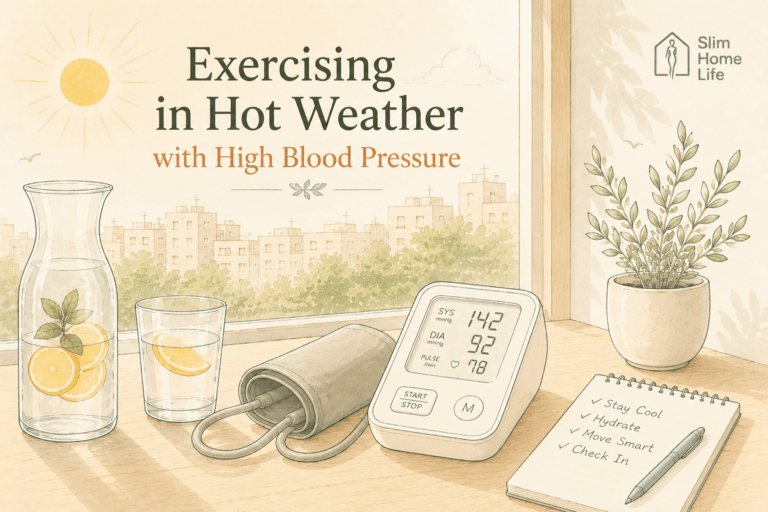
High blood pressure or joint pain does not automatically mean you should avoid exercise. But it does mean you should choose movement carefully. If you have high blood pressure, avoid treating every workout like a test of discipline. Hot weather, dehydration, poor sleep, and intense exercise can make movement feel much harder than expected. Choose cooler hours, lower intensity, and shorter sessions when needed.
We discussed this in Exercising in Hot Weather with High Blood Pressure .
If you have joint pain, avoid jumping straight into running, burpees, or high-impact routines. Start with movement that feels controlled. Swimming, cycling, walking on flat ground, chair exercises, gentle strength work, and mobility routines are often easier on the joints while still helping the body become stronger.
Pain is not proof that the workout is working. A good routine should challenge you, but it should not leave you afraid to move the next day.
Shorter sessions can be especially helpful here. As we explained in Micro Workouts: Do They Really Work? , small sessions can keep the habit alive when longer workouts feel unrealistic.
After 50, the best workout is often the one you can recover from and repeat.
Frequently Asked Questions
Can you lose weight after 50 without extreme diets?
Yes. Most people do better with balanced meals, more protein, more vegetables, fewer sugary drinks, less alcohol, and consistent movement instead of strict short-term dieting.
Why is it harder to lose weight after 50?
Weight loss can feel harder after 50 because muscle mass often decreases, metabolism slows, recovery takes longer, sleep may change, and everyday movement usually becomes lower than it used to be.
What is the best exercise for weight loss after 50?
Walking, low-impact strength training, swimming, cycling, mobility work, and short home workouts can all help. The best option is usually the one you can repeat consistently without pain or exhaustion.
Should I exercise if I have high blood pressure?
In many cases, moderate movement can be helpful, but you should choose intensity carefully and speak with your doctor if you are unsure what is safe for your condition.
How quickly can I see results after 50?
Some changes can appear within the first month, such as better energy, easier walking, less stiffness, and improved confidence. Visible weight loss often takes longer and depends on consistency.
Do I need to go to the gym after 50?
No. Home workouts, walking, swimming, chair exercises, and resistance bands can all be effective when done consistently.