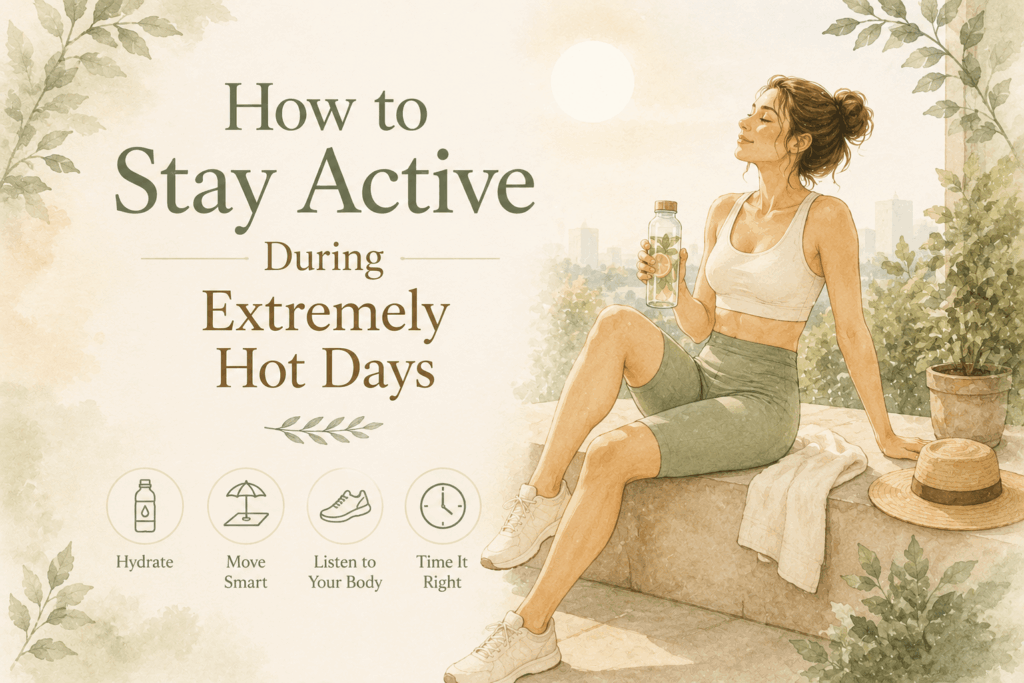
How to Stay Active During Extremely Hot Summer Days
We all love summer… until the heat becomes too much.
Some days are so hot that weather specialists advise people to stay indoors, avoid direct sunlight, and limit physical activity during peak temperatures. And on those days, movement can feel completely different. A normal walk feels harder. A workout that usually feels manageable, suddenly feels exhausting. Even standing outside for too long can drain energy.
That is usually when many people stop moving completely for days or even weeks. But that often creates a different kind of problem. A better and smarter approach is to adjust the way you move, the time you move, and the intensity you choose.
Summer fitness is not about pushing harder in dangerous heat. It is about staying active without overheating.
Why Extreme Heat Drains Energy So Fast
During very hot days, the body works harder to regulate temperature and hydration. Sweating increases. Fluids are lost faster. Sleep can become lighter or more interrupted. Appetite may change. Humidity can make everything feel even heavier because sweat does not evaporate as easily.
This is why many people experience afternoon crashes, heavier legs, lower focus, headaches, and a surprising lack of motivation during heat waves.
Some even feel exhausted despite doing very little physical activity.
A workout that feels fine in spring may feel completely different during a heat wave. That does not mean you are suddenly “out of shape.” It usually means the conditions changed. Instead of forcing the same routine, it usually works better to adapt movement to the weather itself.
Why Completely Stopping Movement Can Make You Feel Worse
When the heat is intense, rest matters. But complete inactivity for several days can create its own problems.
After several inactive days, many people start feeling physically stiffer, mentally heavier, and surprisingly less motivated to move.
The body often feels slower not because it needs more rest, but because it has stopped moving altogether.
The goal is not to force a hard workout during unsafe heat. The goal is to keep the body from becoming completely stagnant. That could mean 10 minutes of mobility, a short indoor session, swimming, stretching, or a walk after sunset.
We explored this pattern further in Why Your Body Feels More Tired When You Stop Moving , where regular lighter movement is often more helpful than staying inactive for long periods.
The Best Time to Move During Hot Weather
Timing matters a lot during summer heat.
Trying to train outside at 3 or 4 PM on a very hot day usually feels miserable, and in some cases, unsafe. Early mornings and later evenings, on the other hand, are usually much better options.
A 20-minute walk at 7 AM can feel completely different from the same walk during peak afternoon heat.
A few small adjustments make a huge difference. Drink before you feel thirsty, choose shaded routes whenever possible, wear lighter clothing, and do not be afraid to reduce intensity during heat waves.
Most importantly, listen to your body. Dizziness, nausea, unusual weakness, or chills are signals to stop and cool down.
Morning movement can be especially useful because it removes the pressure of trying to exercise later when the heat, fatigue, and daily stress are already higher.
We explored this further in Why Your Morning Routine Shapes Your Fitness Results , where earlier routines often make fitness feel easier to start and repeat.
The Best Summer Activities for Very Hot Days
Hot weather does not always allow the same type of training.
Swimming is especially useful because it allows movement while helping the body stay cooler.
Short indoor workouts or stretching also work well when outdoor activity feels uncomfortable. It keeps the body active without adding unnecessary heat stress.
Some useful indoor options include:
- bodyweight squats
- incline push-ups
- glute bridges
- lunges
- planks
- resistance band rows
- low-impact cardio
- mobility work
Try 10–20 minutes in a cooler room, with curtains closed, a fan nearby, and lighter clothing. You can also train earlier in the morning or later in the evening if the room gets too warm during the day.
If you feel overheated, dizzy, nauseous, or unusually exhausted, stop and cool down. During extreme heat, “pushing through” is not a fitness achievement- it is a risk.
For people who want a more structured home approach during summer, our 30 Day Home Weight Loss Program combines realistic home workouts, sustainable routines, and practical movement designed for real everyday life — including extremely hot days when outdoor training does not feel realistic.
The point is not to make every session impressive, but to keep movement present in a safer, more realistic way.
Small Mistakes That Make Summer Fatigue Worse
Sometimes summer fatigue becomes worse because of several small habits happening at the same time. People wait until they are already thirsty, train during the hottest part of the day, eat very heavy meals before activity, or try to maintain the same workout intensity they used during cooler months.
Together these habits can make hot days feel much harder than they need to.
A few small adjustments can make hot days much easier to handle. Cold showers, a wet towel on the neck, lighter meals, cooler rooms, or even keeping a frozen water bottle nearby can help the body recover much faster during extreme heat.
What Realistic Summer Fitness Actually Looks Like
Summer schedules are rarely perfect. Vacations, heat waves, poor sleep, travel, social plans, and changing routines all affect energy.
So a realistic summer routine may look different from your normal plan.
Some days it may be a short morning walk. Other days it may be swimming, mobility work, stretching after sunset, or a brief indoor workout.
The exact activity matters less than staying connected to movement in a way your body can realistically handle.
That still counts. The goal is staying connected to movement in a way your body can realistically handle.
Modern fitness systems increasingly recognize this too. As explored in How AI Learns Your Fitness Patterns , sustainable progress often comes from adapting movement to real behavior patterns instead of forcing the same routine under completely different conditions.
Why Sleep Often Gets Worse During Heat Waves
One more reason why people feel unusually tired during very hot periods is that sleep quality often drops without them fully realizing it.
Hot rooms, sweating during the night, dehydration, and interrupted sleep can leave the body feeling exhausted the next day, even after spending enough hours in bed.
And when sleep becomes worse: energy drops, movement feels harder to start, motivation becomes lower and cravings increase.
Cooling the room before bed, using lighter bedding, avoiding very heavy late-night meals, and reducing screen time can all make a noticeable difference during heat waves.
During heat waves, recovery matters just as much as movement itself.
Frequently Asked Questions
Is it safe to exercise during extreme summer heat?
It depends on the temperature, humidity, time of day, your hydration, and your health. During heat waves, early mornings, indoor workouts, swimming, shade, and shorter sessions are usually safer than exercising in direct afternoon sun.
What is the best time to work out during hot weather?
Early morning or later evening usually feels much better than peak afternoon heat. A short workout before 9 AM is often more manageable than trying to exercise when temperatures are highest.
Should I stop exercising completely during heat waves?
Not always. Rest is important during dangerous heat, but lighter indoor movement, stretching, swimming, or short sessions can help prevent stiffness and fatigue from complete inactivity.
What are the best workouts for very hot days?
Swimming, indoor bodyweight workouts, mobility routines, stretching, resistance bands, and low-impact cardio are often good options when outdoor exercise feels too hot.
How can I avoid overheating during summer workouts?
Train during cooler hours, drink water earlier, wear breathable clothes, stay out of direct sun, reduce intensity, use cooling breaks, and stop if you feel dizzy, nauseous, weak, or unusually exhausted.