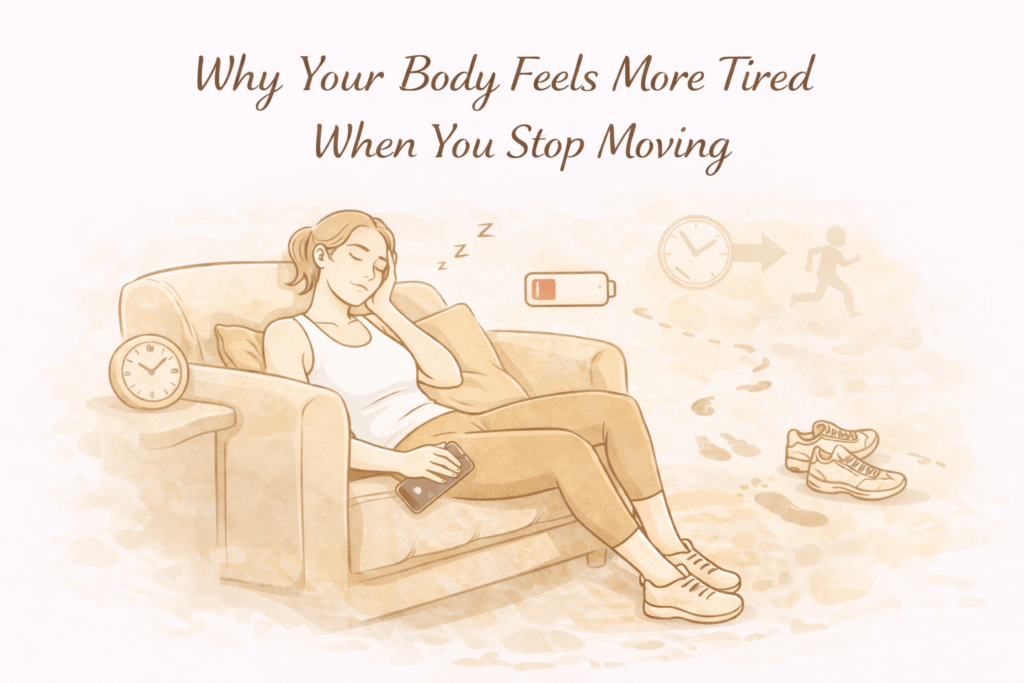
Why Your Body Feels More Tired When You Stop Moving
Have you ever noticed that after a few inactive days, you don’t feel more rested. Instead you feel even more tired.
If you’ve ever skipped workouts to “save energy” but ended up feeling heavier and less motivated, this is something important to understand. It may seem contradictory, but the body often loses energy when movement disappears. What feels like “rest” on the surface can sometimes lead to slower circulation, lower alertness and a heavier overall feeling.
This is because our bodies are designed to recover through balance, not through complete inactivity for long periods of time.
The Body Adapts to Inactivity Too
The human body is remarkably adaptable. It adjusts not only to exercise and training, but also to inactivity.
When movement drops for several days, the body begins adapting to a lower level of demand. Muscles are used less frequently, circulation becomes less active and the systems responsible for producing energy are not stimulated in the same way.
Research in exercise physiology shows that even short periods of inactivity can influence how the body functions. This does not mean the body is “shutting down.” It means it is responding to the signals it receives. When those signals consist mostly of sitting and resting, the body shifts into a lower-energy mode.
Less Movement Often Means Slower Circulation
One of the first things affected by inactivity is circulation. Movement helps the heart pump blood more efficiently and supports the delivery of oxygen and nutrients throughout the body.
When activity levels drop, blood flow becomes less dynamic. Muscles are not being stimulated, and circulation slows down. This often leads to the familiar feeling of heaviness, stiffness and low energy after long periods of sitting or lying down.
You may notice it in simple ways:
- feeling stiff when you stand up
- low energy in the afternoon
- a sense of physical “heaviness”
- slower mental clarity
This happens because your body is not receiving enough movement signals to keep systems active. Circulation is not just about blood flow- it is closely connected to how energized and responsive your body feels.
The good news is that this effect can be reversed quickly. Even a short walk, a few minutes of stretching, or a brief home workout can stimulate circulation, improve oxygen delivery and help your body shift back into a more active state.
This is why small bursts of movement during the day can make such a noticeable difference in how you feel.
We explored this further in Why Walking Is One of the Most Powerful Fat Loss Tools.
Movement Helps the Brain Feel More Awake
Energy is not only physical- it is also neurological.
When the body begins to move, blood flow to the brain increases and neurotransmitters such as dopamine, serotonin and norepinephrine are released. These chemicals influence alertness, focus and perceived energy levels. So even a few minutes of movement can make the mind feel clearer and more awake. Movement acts like a signal: the body is active, so the brain becomes active too.
Too Much Rest Can Create a Different Kind of Fatigue
There is an important difference between recovery and prolonged inactivity.
Recovery supports the body. It allows muscles to rebuild, energy systems to restore and the nervous system to reset.
Inactivity, on the other hand, reduces stimulation. The body is not being challenged, circulation slows and energy systems are used less. When inactivity continues for longer periods, it can create a type of fatigue that feels heavy, dull and difficult to explain.
You may notice it in everyday situations:
- sleeping enough but still feeling tired
- lacking motivation to move
- feeling physically heavy or slow
- struggling to “get going” during the day
This can be confusing, because it feels like you are resting, but not actually recovering. The reason is simple: the body is designed to function through cycles of activity and recovery.
When movement disappears from that cycle, the system becomes less balanced. Energy does not build- it gradually drops.
This is why gentle movement often restores energy more effectively than complete stillness.
Small Daily Movement Prevents Energy Loss
The good news is that you do not need intense workouts to prevent this. Simple daily movement is enough.
- A short walk
- A few minutes of stretching
- A light mobility routine
- A 10–20 minute home workout
These small actions help maintain circulation, stimulate the nervous system and support your overall energy.
If you enjoy short sessions, you may also like Micro Workouts: Do They Really Work?.
Energy Comes From Use
One of the biggest misunderstandings about fatigue is the belief that doing less will always create more energy. Actually, the body produces energy more efficiently when it is used regularly. This is because movement stimulates circulation, activates muscles and signals the body to stay active.
At the cellular level, physical activity improves mitochondrial function- the system responsible for producing energy.
When movement becomes limited, this system is used less frequently, and energy production can feel slower.
This is the reason why gentle, regular movement can make such a noticeable difference.
We explore this further in Why Movement Actually Creates Energy (Not Exhaustion).
A Different Way to Think About Rest
Rest is essential. But rest does not always mean complete stillness.
In many cases, the body feels better when it continues to move, just in a lighter, more supportive way.
Walking, stretching, mobility work or short low-intensity sessions help maintain circulation, keep the nervous system active and support the body without adding unnecessary stress.
This creates a healthier rhythm:
- movement activates the body
- recovery restores it
- light activity keeps the system balanced
The goal is not to push harder every day. It is to stay engaged, even on low-energy days. Because in many cases, the body does not need more rest, it needs the right kind of movement.
If you want a simple way to stay active without overloading your body, you can explore the 30-Day Home Weight Loss Program, built around short, manageable daily sessions that support both movement and recovery.
Frequently Asked Questions
Why do I feel more tired when I don’t exercise?
Because inactivity reduces circulation and lowers stimulation of energy systems in the body.
Is it better to rest completely or stay lightly active?
Light movement is often more effective than complete inactivity, as it helps maintain circulation and energy.
What is the best way to restart energy after inactive days?
Start with simple movement like walking, stretching or short workouts. The key is to begin gently and consistently.