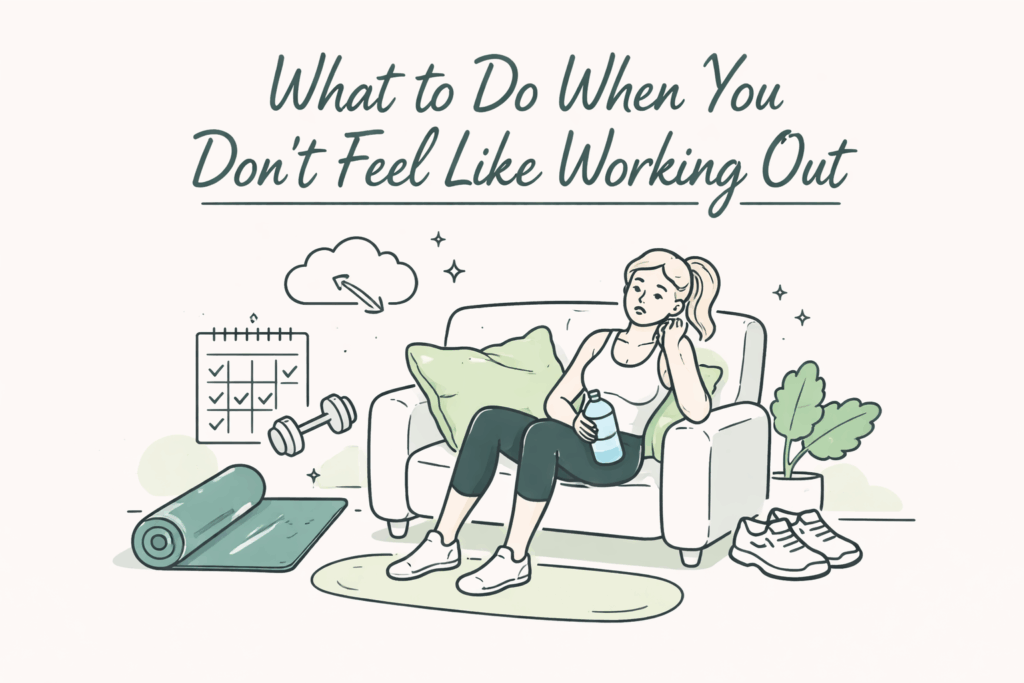
What to Do When You Don’t Feel Like Working Out
Not feeling like working out doesn’t mean you’re lazy. It usually means something in your system needs adjustment – your energy, your environment, your schedule, or the way your plan fits real life.
Why Motivation Drops (And Why It’s Normal)
Unfortunately, motivation isn’t a stable resource. It rises and falls with sleep, stress, decision fatigue, hormones, and how much mental space you have left at the end of the day. That’s why relying on motivation alone is risky- it can disappear right when you need it most. When you feel resistance, treat it as data, not a personal failure.
If you want the deeper framework behind this, read why you don’t need motivation — you need structure and why motivation fails and why systems create real transformation.
Don’t Skip – Shrink the Commitment
On low-motivation days, the problem isn’t movement- it’s the size of the request you’re making of yourself. Instead of asking for a full workout, ask for the smallest version you can complete without negotiation.
A short workout is better than nothing.
- Do 5 minutes. Just start. Momentum is built through action, not thinking.
- Lower the bar. A “minimum workout” keeps your identity intact: you are someone who shows up.
- Finish early on purpose. Stopping after a short session is still a win if it keeps your streak alive.
Small wins compound faster than rare heroic efforts. That’s why quick wins matter more than long workouts.
Change the Environment, Not Your Willpower
Willpower is unreliable. Environment is quietly powerful. If working out feels hard to begin, reduce friction around the habit. Make the default choice the easy choice.
- Lay out your workout clothes before the day begins.
- Keep a mat or small space ready (no setup ritual required).
- Choose a time window that matches your real energy – not your “ideal self.”
- Use a simple cue: “After coffee / after work / after dinner, I move for 10 minutes.”
If you want to go deeper on this, see why your environment shapes your results and why home fitness creates true freedom.
Build a “Low Energy Version” of Your Workout
Sustainable fitness doesn’t require you to feel amazing every day. It requires a plan that includes a low-energy option. When energy is low, do the version that keeps you moving and protects consistency.
- 10-minute mobility reset (hips, shoulders, spine)
- Light full-body circuit (squats, wall push-ups, glute bridge, easy core)
- Walk for 15 minutes (the most underrated “workout” for momentum)
- Beginner yoga flow for nervous system reset (Yoga for Beginners)
This is also why home workouts beat the gym for real-life consistency – you can adapt instantly without extra barriers.
The Goal Is Continuity, Not Intensity
Most people think transformation comes from the hardest sessions. In reality, your body changes because of what you repeat. Consistency is a skill — and the fastest way to build it is to keep the chain unbroken. Not through extreme, exhausting workouts, but by showing up again tomorrow.
If this mindset resonates, read why consistency matters more than intensity and why daily micro-choices shape your body more than big goals.
When to Actually Rest (Without Losing Momentum)
Sometimes “I don’t feel like it” is your body asking for recovery, not your mind making excuses. Real rest is part of a good system- the key is resting intentionally rather than drifting into a break that lasts weeks.
- Choose active recovery (walk, mobility, gentle yoga).
- Set a minimum standard even on rest days (5–10 minutes of movement).
- Support recovery with sleep and a calmer night routine- see why your evening routine determines tomorrow’s success.
A Simple “No-Motivation” Action Plan
When you don’t feel like working out, use this simple sequence:
- Start small: commit to 5 minutes.
- Reduce friction: change the environment (clothes, space, timing).
- Choose the low-energy version: mobility, walk, or a short circuit.
- Stop while it’s still easy: protect the habit and your confidence.
That’s how sustainable systems are built: one realistic day after another.
Want a System That Adapts to Real Life?
If you want a structured plan that supports real schedules and real energy levels, start with the 30-Day Home Weight Loss Program. For a more personalized approach that adapts to your goals, time, and daily rhythm, explore the AI Personal Fitness Coach.