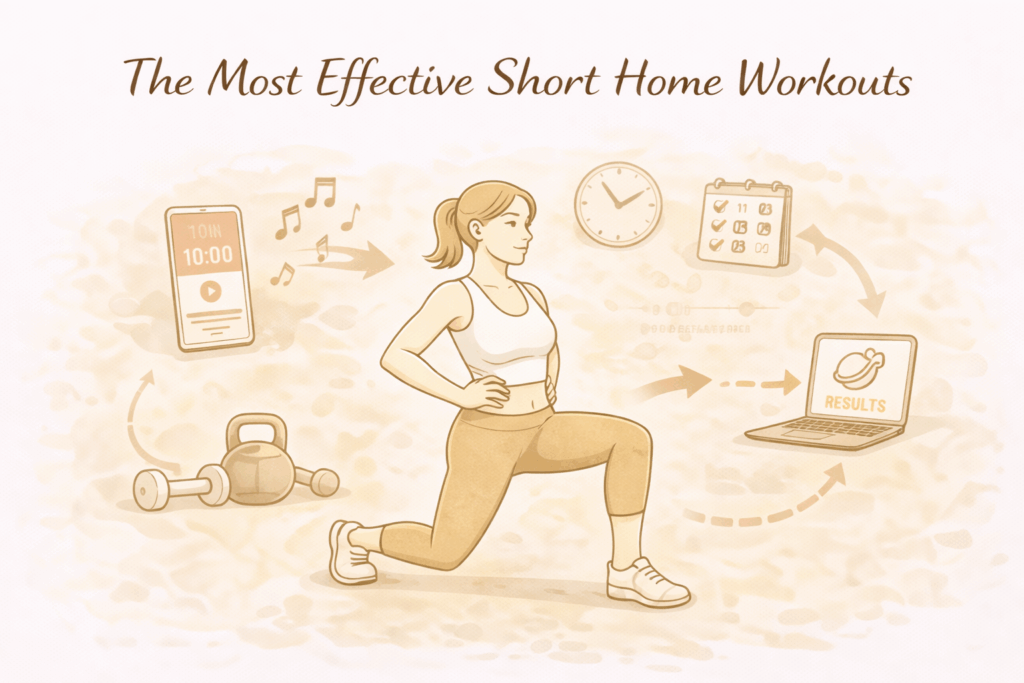
The Most Effective Short Home Workouts
Can 15 minutes of exercise really make a difference? Isn’t that too short a time?
We all harbor the illusion that fitness often involves long gym sessions, perfect programs, expensive equipment, and workouts that leave us completely exhausted and sweaty.
Ditch the idea of heavy bars and treadmills. Because often the best workout is not the one that takes your breath away, but the one that you can actually start, finish, and repeat. Even on busy days, low-energy days, or days when you simply do not feel like exercising at all.
That is why short home workouts can be so powerful. They remove many of the usual excuses: no commute, no crowded gym, no complicated setup, no need to block an entire hour and more. Just a small space, a few simple movements, and enough consistency to keep the body active.
Why Many People Avoid Home Workouts
A lot of people still believe that if you really want to change your body, you must go to the gym. Home workouts often feel “not serious enough” in comparison.
At the same time, many people already feel: too tired after work, too uncomfortable in their body, or simply too shy to walk into a gym full of confident people.
So they postpone it for next Monday, next month. After work becomes less stressful. When they finally “feel ready.”
And honestly, a lot of people recognize these thoughts:
- “I need at least 45 minutes, and I don’t have that kind of time.”
- “I am too out of shape to start.”
- “I already missed this week. I’ll restart next Monday.”
- “I do not even know which workout to choose.”
- “If I cannot do it properly, what’s the point?”
- “People at the gym will look at me because I don’t know how to do the exercises.”
This is exactly where short home workouts can help. They make the first step feel smaller and less intimidating.
Instead of needing a full fitness plan, expensive equipment, or a perfect routine, you only need 10–20 minutes and a few simple movements your body can actually handle. And once movement starts feeling manageable instead of overwhelming, it becomes much easier to repeat and turn into part of normal everyday life.
What is a Short Home Workout?
A short workout does not need to be complicated.
It can be:
- a 10-minute beginner bodyweight session
- a 15-minute strength circuit
- a 20-minute low-impact home workout
- 5 minutes of mobility when energy is very low
- a short apartment workout with no jumping
- a quick workout before showering
The idea is keeping movement present in your day, without needing to spend a lot of time traveling to the gym, staying there, and returning back home.
For beginners or very shy people, this is especially important. A short workout at home feels less intimidating, creates less soreness, and makes it easier to come back again the next day.
The Best Short Home Workouts for Beginners
The most effective short workouts are usually the simplest ones. Instead of trying complicated gym-style routines, beginners often get much better results from basic movements that train several parts of the body at the same time and feel easier to repeat.
For beginners, who do not have equipment, or ddo not want to spend money on fitness gear, these exercises often work well:
- chair squats
- incline push-ups against a table, wall, or couch
- glute bridges on the rug
- step-ups on stairs
- standing knee raises
- bodyweight lunges or reverse lunges
- planks or modified planks
These movements are useful because they do not require special equipment and can be adjusted to your current level.
For example, if regular push-ups feel too hard, incline push-ups are a much better starting point. If lunges feel unstable, chair squats may be safer and easier to control.
A good home workout should not make you feel defeated after five minutes. It should make you feel like you can do it again tomorrow.
And importantly, effective movement does not require expensive equipment or a gym membership. As explored in How to Stay Fit Without a Gym Membership , simple realistic movement often works much better long-term than complicated fitness plans.
Three Simple Short Workout Formats That Work
You do not need endless workout options. Here are three simple formats that work well at home.
1. The 15-Minute Beginner Circuit
Choose 4 exercises and repeat them for 3 rounds.
- 10 chair squats
- 8 incline push-ups
- 10 glute bridges
- 20–30 seconds plank or modified plank
Rest when needed. Do not overwelm yourself.
This is simple, realistic, and strong enough to activate the whole body without feeling overwhelming or feel intimidated by advanced workouts.
2. The No-Jumping Apartment Workout
For people who live in apartment buildings, do not want to disturb neighbors, or simply need something lower-impact, no-jumping workouts can be a surprisingly good option. They are quieter, easier on the joints, and usually feel much more manageable for beginners, people with more body weight, or anyone returning after a long break from movement.
That does not mean they are “ineffective“. Even simple no-jumping exercises can still increase heart rate, activate muscles, improve circulation, and help the body stay active without putting unnecessary stress on the knees or lower back.
- Marching in place
- Standing side steps
- Chair squats
- Wall push-ups
- Standing knee raises
- Slow mountain climbers on a table or couch
No jumping. No loud movements. No complicated setup. Just controlled movement that keeps the body active.
3. The Low-Energy Day Workout- what to do
Some days we simply do not want to train at all. Maybe the weather feels depressing. Maybe work drained all your energy. Maybe you slept badly. Maybe your motivation completely disappeared for the day. We all know those days. We had them before, and we will definitely have them again.
On those days, it is important to know that your one and only goal is… not disappearing completely from your routine. Simple as that.
- do 5 minutes of stretching, instead of usual 20 min workout
- 10 slow squats
- 10 wall push-ups
- 30 seconds of marching in place
- 2 minutes of mobility
- walk during a phone call
- do one round of your usual circuit
- choose mobility instead of cardio
- lower the intensity instead of stopping movement completely
It does not look or sound impressive. But psychologically, it matters much more than people realize. Because every time you still move in some form, even briefly, the brain keeps seeing movement as part of your normal life instead of something temporary.
How to Structure a 15-Minute Home Workout
So let’s get straight to the point: what does an effective short home workout actually look like? Not a complicated fitness plan. Not a one-hour exhausting session. Just a simple realistic workout you can actually do at home, even on busy days.
Here is one practical example:
Minute 0–3:
Warm up with easy movement, arm circles, marching in place, hip circles, or light mobility.
Minute 3–12:
Main circuit:
- chair squats
- incline push-ups
- glute bridges
- standing knee raises
- plank or modified plank
Move at a steady pace and rest when needed. Repeat 2- 3 times each.
Minute 12–15:
Slow down with stretching, breathing, or gentle mobility.
This is enough to wake up the body, activate muscles, improve circulation, and create a real training habit.
If you prefer not to think about structure every day, the 30-Day Home Weight Loss Program is built around short, realistic home workouts that fit normal life without requiring complicated planning.
How to Make Short Workouts Easier to Repeat
Short workouts work best when they are easy to start and repeat daily.
A few practical changes help more than people expect:
- train before sitting on the couch after work
- keep workout clothes visible
- use a timer instead of checking your phone constantly
- exercise before showering instead of waiting for “later”
- choose no-equipment workouts when you feel mentally tired
- keep resistance bands or a mat in an easy-to-see place
The less decision-making a workout requires, the more likely it is to happen.
That is why short workouts are so useful for busy people. They reduce the mental barrier between “I should exercise” and actually doing it.
For many people, morning movement also feels mentally easier to maintain than waiting until late evening. We explored this further in Why Your Morning Routine Shapes Your Fitness Results .
When Short Home Workouts Work Best
Short home workouts are especially useful when life is busy or energy is low.
They work well for:
- beginners who feel overwhelmed
- people returning after a long break
- busy parents
- people working from home
- anyone avoiding the gym
- people who need low-impact movement
- days when a long workout is unrealistic
They are also helpful when you are trying to rebuild trust with yourself.
Because every completed session, even a short one, proves that movement can fit into your real life.
This is also why movement often increases energy instead of draining it. As explained in Why Movement Actually Creates Energy, Not Exhaustion , regular activity can improve how your body produces and uses energy over time.
Short Workouts Are Not Magic- But They Are Realistic
As a conclusion: short workouts can be effective, but they are not magic. If your goal is weight loss or visible body change, they work best when combined with:
- better food choices
- enough protein
- more daily movement
- better sleep
- less mindless snacking
- realistic consistency
That is important to say clearly. A 15-minute workout can help a lot. But it works best as part of a lifestyle you can actually maintain.
Frequently Asked Questions
Can a 15-minute home workout really be effective?
Yes. A well-structured 15-minute workout can activate muscles, raise heart rate, improve circulation, and help build consistency when repeated regularly.
What is the best short home workout for beginners?
A simple circuit with chair squats, incline push-ups, glute bridges, standing knee raises, and modified planks is a good beginner-friendly option.
Can I do short home workouts without equipment?
Yes. Bodyweight exercises, low-impact movements, mobility work, and no-jumping workouts can all be done at home without equipment.
Are short workouts good for weight loss?
They can help, especially when combined with better eating habits, daily movement, sleep, and consistency. Short workouts make exercise easier to repeat, which supports long-term progress.
Is a short workout better than skipping the day?
Yes. Even 5–15 minutes of movement can keep the habit alive, reduce stiffness, and make it easier to return to your routine the next day.
Can I do short workouts in an apartment?
Yes. No-jumping exercises like chair squats, wall push-ups, standing knee raises, glute bridges, and mobility work are good options for apartment workouts.