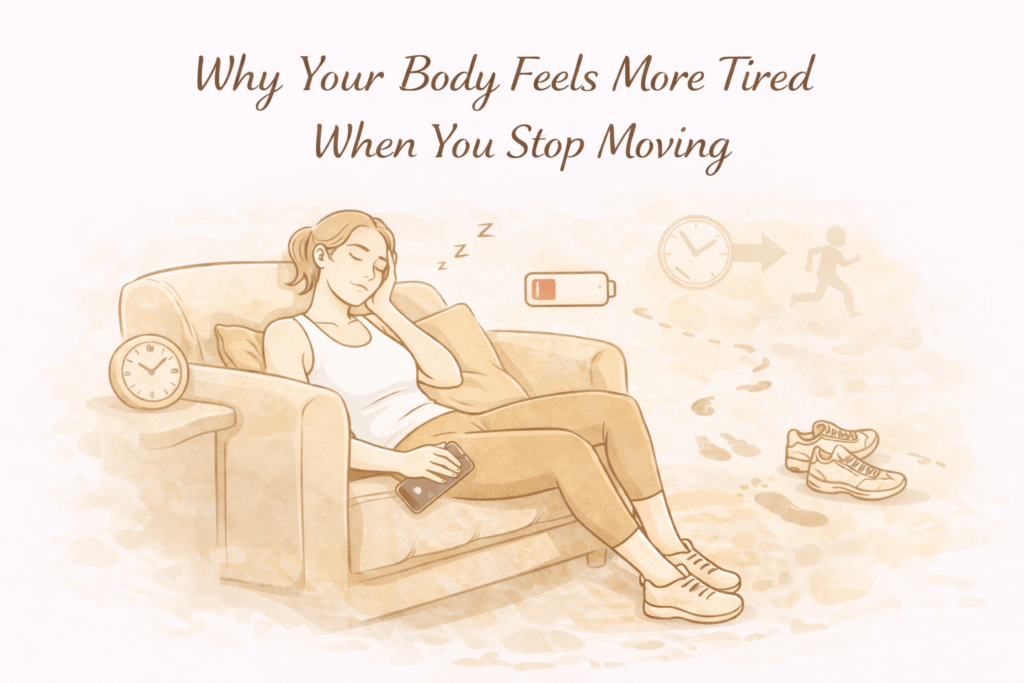
Why Your Body Craves Movement After Long Periods of Sitting
Have you ever felt stiff, low on energy or uncomfortable after sitting for too long? That urge to stand up, stretch or move is not random. It is your body trying to restore balance.
Understanding why this happens can help you improve your energy, movement and even your fitness consistency throughout the day.
The Body Was Not Designed for Long Hours of Sitting
Modern life often requires long periods of sitting- at desks, in cars or in front of screens. While the body can tolerate this for a while, it was not designed to remain inactive for many hours at a time.
From a biological perspective, the human body evolved in environments that required regular movement throughout the day: walking, carrying, climbing and changing positions frequently.
When movement disappears, circulation slows, muscles remain inactive and joints stay in the same position for long periods.
Why the Urge to Move Appears
After sitting for a while, the nervous system begins sending signals that encourage movement. These signals can appear as restlessness, stiffness or the familiar need to stretch.
Research shows that prolonged sitting can reduce circulation and slow metabolic activity. Movement helps reverse this effect by activating muscles and increasing blood flow.
Even a few minutes of walking or stretching can restore circulation and make the body feel noticeably lighter.
Movement Restores Circulation
One of the main reasons movement feels good after sitting is improved blood circulation.
When muscles contract during walking or light activity, they help pump blood back toward the heart. This improves oxygen delivery to tissues and supports the removal of metabolic waste products. In simple words, movement helps “restart” systems that slow down during long periods of inactivity.
Short Movement Breaks Can Reset the Body
The good news is that the body responds quickly to movement. Even short breaks can make a difference.
Standing up, walking for a few minutes or doing a brief mobility routine can help restore circulation and reduce stiffness. These short breaks also support energy levels and concentration throughout the day.
This is why even short daily movement can support both energy and long-term fitness.
If you enjoy short sessions of activity, you may also find our article Micro Workouts: Do They Really Work? useful.
What Happens Inside the Body When We Sit Too Long
When the body remains seated for long periods, several internal processes begin to slow down.
Research has shown that muscle activity in the legs drops dramatically during prolonged sitting. This reduces the action of enzymes responsible for breaking down fats and regulating blood sugar.
Circulation also becomes less active. Blood tends to pool more in the lower body, while muscles remain largely inactive. This often contributes to stiffness, reduced mobility and the familiar feeling of heaviness after sitting for too long.
The body responds quickly when movement returns. Standing up, walking or stretching reactivates muscles and helps circulation return to a more balanced rhythm.
Even brief movement breaks can help interrupt long sedentary periods and restore the natural flow of activity the body expects throughout the day.
Why This Matters for Your Fitness
Long periods of sitting do not only affect comfort. They also affect how easy it is to start and complete workouts.
When the body stays inactive for too long, energy drops, muscles feel less responsive and movement feels harder to begin. This is one reason why many people struggle to start workouts after a long day of sitting.
Short movement breaks during the day can change this.
They help maintain circulation, keep muscles active and make it easier to transition into exercise later.
Even simple actions like standing, stretching or walking for a few minutes can support your overall fitness consistency.
How to Add Movement Into Your Day
You do not need a full workout to break long sitting periods.
Simple actions can make a difference:
- stand up every 30–60 minutes
- take short walks during the day
- stretch your shoulders and back
- do a short 5–10 minute movement session
These small actions help your body stay active and reduce the negative effects of prolonged sitting.
If you want a simple way to stay active daily, you can explore the 30-Day Home Weight Loss Program, built around short, repeatable sessions that fit into real life.
A Simple Habit That Makes a Difference
The body often asks for movement long before we consciously decide to exercise. A slight stiffness in the back, the urge to stretch, or the need to stand up and walk around are all small signals that the body wants to change position and activate its muscles.
Learning to notice these signals can help maintain energy, circulation and physical comfort throughout the day. Ignoring them for too long often leads to the opposite effect- heaviness, reduced concentration and physical discomfort.
Fortunately, the solution is usually very simple. Standing up for a few minutes, walking across the room, stretching the shoulders or taking a short walk outside can quickly restore circulation and relieve tension that builds during long periods of sitting.
With repetition, these small movement breaks become a natural habit. Instead of forcing the body into long hours of inactivity, you allow it to move the way it was designed to move.
Sometimes the most effective change is also the simplest: standing up, moving regularly and allowing your body to stay active throughout the day. Because movement is not just exercise. It is something your body needs to function at its best.
Frequently Asked Questions
Why do I feel tired after sitting for a long time?
Long periods of sitting slow circulation and reduce muscle activity, which can lead to a heavy and low-energy feeling.
How often should I take movement breaks?
Standing up and moving every 30–60 minutes can help maintain circulation and reduce stiffness.
Can short movement breaks replace workouts?
No, but they support your overall activity level and make it easier to stay consistent with workouts.
What is the best type of movement during the day?
Walking, stretching and light mobility exercises are simple and effective ways to keep your body active.