The Calories You Never Count (But Your Body Does)
Have you ever reached the end of the day thinking, “I hardly ate anything today.” And yet your weight keeps going up.
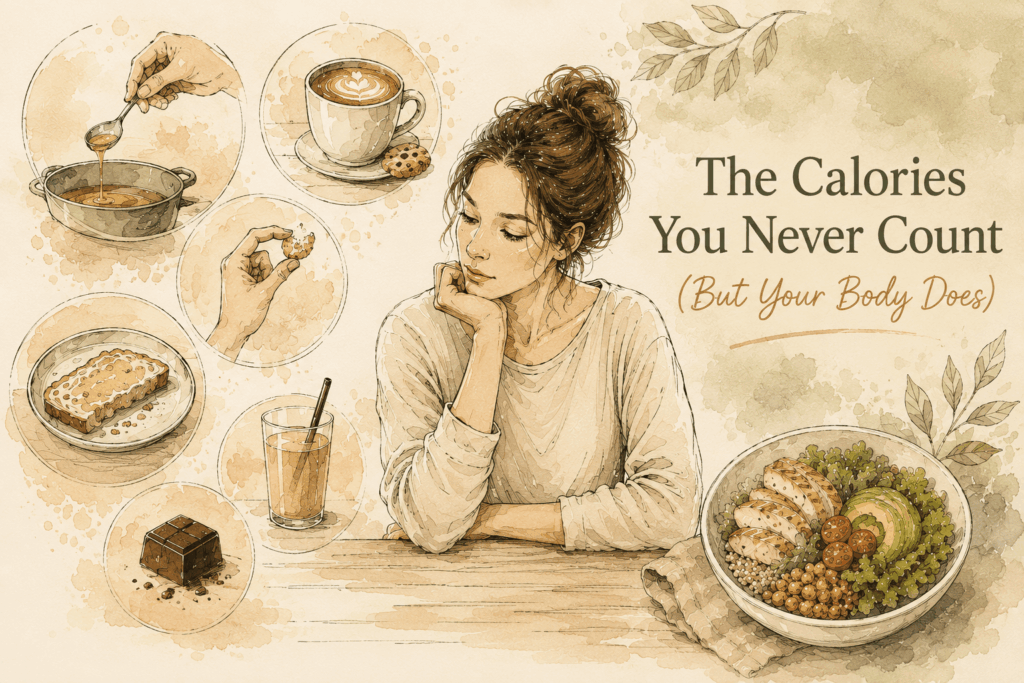
For many people, the problem is not the meals they remember. It is everything that unnoticebly happens between those meals, which they do not count. One spoon while cooking. A second coffee with sugar. A slice of bread to finish the sauce. A few bites that “don’t really count.” One biscuit during a meeting. A handful of nuts while watching television.
Yes, individually they are insignificant. But repeated every day, they slowly become part of your normal eating routine, withot realizing it.
Your Body Counts Everything, Even When You Don’t
Let’s be honest—most people remember breakfast, lunch, and dinner quite clearly. Some can even tell you exactly how many cups of coffee they had during the day. What they rarely remember are the dozens of tiny eating moments that happen automatically in between.
A coffee before work. Another one after lunch. A piece of chocolate from a colleague. A few fries from somebody else’s plate. Half a cookie while making coffee.
By evening, many people honestly believe they have not eaten very much. The mind remembers the meals. The body remembers everything.
Coffee is a good example of added calories that often go unnoticed. Many people never drink it black. They add sugar, flavoured syrups, whipped cream, or sweet creamers, turning a simple cup of coffee into something much more calorie-dense. Many people would never eat three teaspoons of sugar straight from a spoon. Yet they can easily drink the same amount in several cups of coffee without thinking about it.
Fresh fruit juice can be misleading too. Although it comes from fruit, most of the fibre has been removed, leaving mainly natural sugars that are much easier to drink than to eat. Eating two oranges usually feels filling. Drinking the juice from two oranges takes less than a minute and often does not reduce the amount of food you eat afterwards.
Lunch brings its own habits. One extra slice of bread with soup. Another piece to wipe the sauce from the plate. In many countries, this is simply part of the meal, so nobody thinks twice about it. The extra bread is rarely eaten because of hunger. It is usually eaten because the sauce tastes too good to leave behind.
Then there is cooking. A spoon to taste the soup. A small piece of cheese while preparing dinner. Trying the pasta. A bite of chicken before serving.
And finally, there are the leftovers. “There isn’t much left.” “It isn’t worth putting it back in the fridge.” So the last few bites disappear—not because you were hungry, but because throwing food away somehow feels worse than eating it.
The problem is not one taste, one slice of bread, or one unfinished portion. It begins when these small habits become part of every single day.
Make Hidden Calories Visible
Many people believe they need to count every calorie to lose weight. It is often more useful to become aware of automatic eating habits first.
Try a simple experiment tomorrow. Do not change anything. Do not eat less. Instead, write down every single time something enters your mouth.
Do not write calories. Write moments. For example:
09:00 — Coffee with sugar.
10:30 — One biscuit during a meeting.
12:40 — Bread with soup.
15:00 — A piece of chocolate.
18:10 — Tasting dinner while cooking.
21:00 — A handful of nuts while watching television.
Most people are surprised by how often they eat without ever thinking of it as a meal.
At the end of the day, look at the list without judging yourself. You are not searching for failure. You are searching for patterns.
Maybe the problem is not lunch. Maybe it is everything that happens before and after it.
Sometimes Detox Means Eating Less, Not Buying More
It is common to hear the word “detox” and immediately think about expensive juices with ultra-expensive ingredients, supplements, or restrictive diets. But detox does not always mean adding another product. Sometimes it means reducing the unnecessary overload your body deals with every day.
Think about constant snacking, sugary drinks, alcohol, heavy late meals, highly processed foods, and eating from morning until bedtime without giving digestion much of a break.
A breakfast of plain yogurt with oats or ground flax seedя, overnight oats with milk and chia seeds, fresh fruit, or a simple balanced meal often supports your body far better than skipping breakfast and relying on coffee until lunchtime.
The same applies throughout the day. Replacing sugary drinks with water more often. Choosing fruit instead of sweets some afternoons. Eating one balanced meal instead of constant grazing.
Small changes repeated every day usually do much more than short periods of extreme restriction. We explored this idea further in Summer Detox Habits That Actually Make You Feel Better and in our 7-Day Detox Guide , where detox is about reducing everyday overload rather than chasing quick fixes.
Small Habits Decide Big Results
The purpose of this article is not to make you afraid of every extra bite.
Weight gain rarely comes from one birthday cake. Or one pizza. Or one holiday.
It usually comes from dozens of tiny decisions repeated so often that they stop feeling like decisions.
The good news is that the opposite works too. Small positive habits repeated every day can gradually change your weight, your health, and your relationship with food.
Once you notice the habits that no longer serve you, you can begin replacing them with better ones—one small decision at a time.
If this sounds familiar, you may also enjoy Why People Gain Weight in Summer Without Realizing It , where we explore how everyday routines quietly change without us noticing.
Frequently Asked Questions
Why am I gaining weight if I don’t eat much?
Many people underestimate how often they eat between meals. Small habits repeated throughout the day can gradually increase your calorie intake without feeling like “real eating.”
Does tasting food while cooking really matter?
One taste is rarely a problem. The issue is when tasting becomes several bites every day without you noticing.
Is fresh fruit juice healthier than soft drinks?
Fresh juice contains vitamins, but it also contains concentrated natural sugars and much less fibre than whole fruit. Whole fruit is usually the more filling choice.
Do I need to count calories to lose weight?
Not necessarily. Many people make great progress simply by becoming more aware of their everyday eating habits before they start counting calories.
What is the easiest habit to change first?
Start by noticing, not restricting. Becoming aware of your automatic eating habits is often the first step towards lasting change.