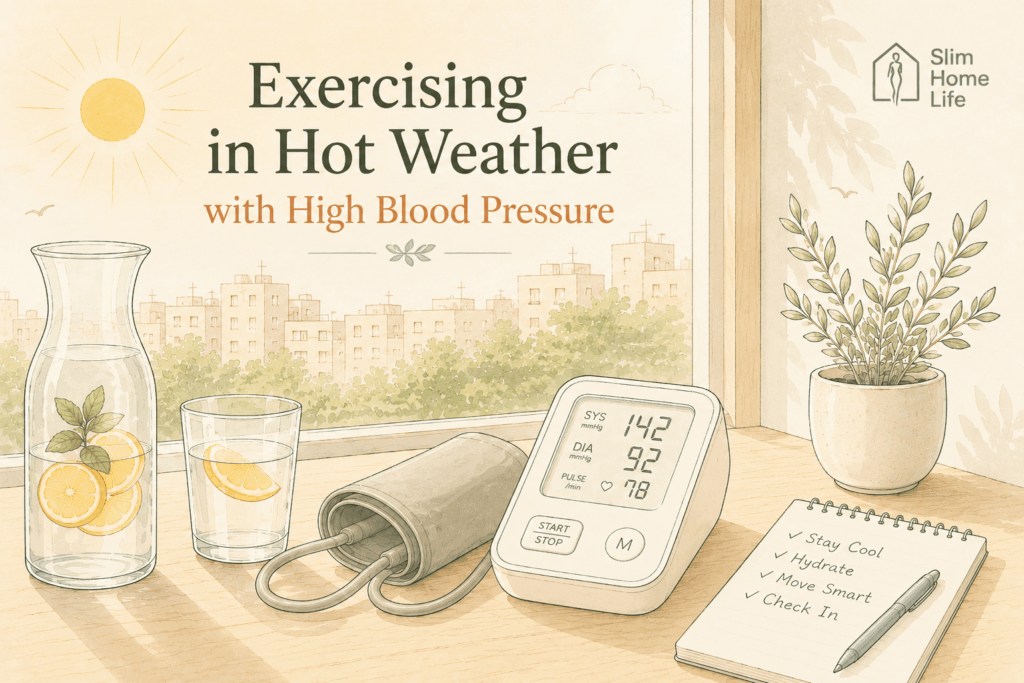
Exercising in Hot Weather with High Blood Pressure
If you have high blood pressure, you have probably experienced this before.
The weather gets hotter and you get tired faster. Walking feels heavier. Exercise becomes less comfortable. Sometimes even a short walk can feel like more effort than it should.
And if you have high blood pressure, this is something you should take seriously. Not with fear, just with more awareness.
During hot weather it is important to move smarter, safer, and at the right time of day.
Why Heat Feels Different When You Have High Blood Pressure
When the weather is hot, your body works harder to keep itself cool.
Blood vessels respond to heat. Circulation changes. Sweating increases. The heart may need to work harder than usual, especially when heat and physical activity happen together.
This does not mean every person with high blood pressure should avoid exercise. But it does mean that summer workouts should not be treated the same way as spring workouts.
A routine that feels comfortable in cooler weather may feel much more demanding during a heatwave.
This is why timing, intensity, and recovery matter more during hot days.
The Biggest Mistake Is Stopping Completely
Many people with high blood pressure become afraid to move during summer. And, to be honest, the concern is understandable.
Nobody wants to feel dizzy, overheated, short of breath, or unsafe while exercising.
But, on the other hand, stopping movement completely is usually not the best long-term solution. Regular, moderate movement can support cardiovascular health, energy, weight management, and overall fitness. The key is choosing the right type of movement for the conditions.
During hot weather, this often means moving earlier, moving shorter, and avoiding unnecessary intensity.
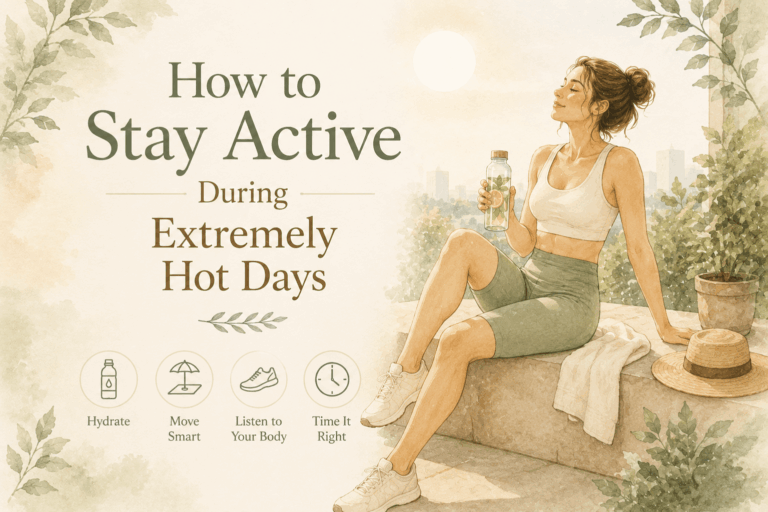
We explored this idea further in How to Stay Active During Extremely Hot Days , where we explain how to adjust movement when the weather becomes difficult.
A simple rule works well during hot days: Move earlier. Move shorter. Move lighter.
Moving earlier helps you avoid the strongest heat of the day. For many people, morning movement feels much safer and more manageable than afternoon activity.
Moving shorter helps reduce unnecessary strain. A 10-minute session can still be useful if it keeps the habit alive without exhausting the body.
Moving lighter means choosing lower-impact activity when needed. Walking in shade, gentle mobility, stretching, easy cycling, swimming, or a short home routine may be much more appropriate than intense outdoor training during extreme heat.
Do not think this makes your workout any less valuable. It simply makes it more appropriate for the conditions.
If mornings work better for you, you may also find useful ideas in Easy Morning Movement Routines for Hot Days .
Choose Movement That Does Not Overheat You
When temperatures are high, the type of exercise matters.
For many people with high blood pressure, gentle and moderate movement is easier to manage than intense workouts during summer heat.
Instead of long outdoor sessions, consider shorter indoor workouts, light stretching, or mobility work. Swimming is often one of the best options during hot weather, not only because the water helps cool the body, but also because it places less stress on the joints while allowing you to move continuously.
Water aerobics can be another excellent choice, especially for older adults or people who are carrying extra weight. The water supports the body, making movement feel easier while still providing gentle resistance.
Cycling at an easy pace is another good alternative if you avoid the hottest hours of the day. The goal is not speed or distance, but comfortable, continuous movement that allows you to keep a normal conversation.
Indoor activities can also work very well during heatwaves. Gentle yoga, stretching, mobility exercises, or a short home workout in a cool room may be much safer than exercising outdoors when temperatures are extreme.
Pay Attention to Medication and Heat
This part is important.
Some people with high blood pressure take medication that can affect how the body responds to heat, sweating, hydration, or changes in blood pressure.
This does not mean you should change anything on your own. Never stop or adjust medication without speaking to your doctor. But if you notice that hot weather makes you feel unusually weak, dizzy, lightheaded, or unstable during activity, it is worth discussing this with a healthcare professional.
Exercise should support your health, not create additional risk.
A Safer Hot-Weather Workout Checklist
Before exercising in hot weather, do a quick check instead of relying only on motivation.
First, look at the temperature and humidity, not only the clock. A morning can still feel heavy if the air is humid and there is little wind.
Second, choose the easiest version of your workout before you begin. If you normally walk for 40 minutes, start with 15 or 20. If you usually do a full routine, choose a shorter home session instead.
Third, avoid starting exercise already tired, hungry, overheated, or lightheaded. With high blood pressure, the body may have less room for “pushing through” during extreme heat.
And finally, decide in advance when you will stop.
If you feel dizzy, unusually weak, short of breath, nauseous, confused, or feel chest discomfort, stop immediately, move to a cooler place, and rest. If symptoms feel severe or do not improve, seek medical help.
A safe workout still counts- the most important is your health.
Frequently Asked Questions
Can I exercise in summer if I have high blood pressure?
In many cases, yes, but intensity, timing, and symptoms matter. Choose cooler hours, avoid extreme heat, and speak with your doctor if you are unsure what level of activity is safe for you.
What is the safest time to exercise during hot weather?
Early morning is usually the most comfortable option because temperatures are lower and the body has not yet been drained by the heat of the day.
What exercises are better during heatwaves?
Gentle walking, stretching, mobility work, swimming, light cycling, and short home workouts are often more realistic than intense outdoor training during very hot days.
Should I stop exercising if I feel dizzy?
Yes. Stop immediately, move to a cooler place, rest, and cool down. If dizziness is severe, unusual, or does not improve, seek medical help.
Is it better to skip workouts completely during extreme heat?
Sometimes rest is the safest choice, especially during extreme heat. But on many days, you can still stay active by choosing shorter, lighter, indoor, or early-morning movement.