How Stress Affects Fat Loss and Cravings
Stress changes far more than mood. It changes energy levels, food choices, appetite, decision-making, and the way the body responds to hunger. In other words- it changes everything.
This is one reason fat loss often feels much harder during stressful periods — even when someone is trying to “eat better.” In many cases, the body and brain are responding exactly the way they were designed to respond under pressure.
Why Stress Changes the Way You Eat
When the brain perceives stress, it shifts attention toward survival and energy preservation. This response is deeply biological.
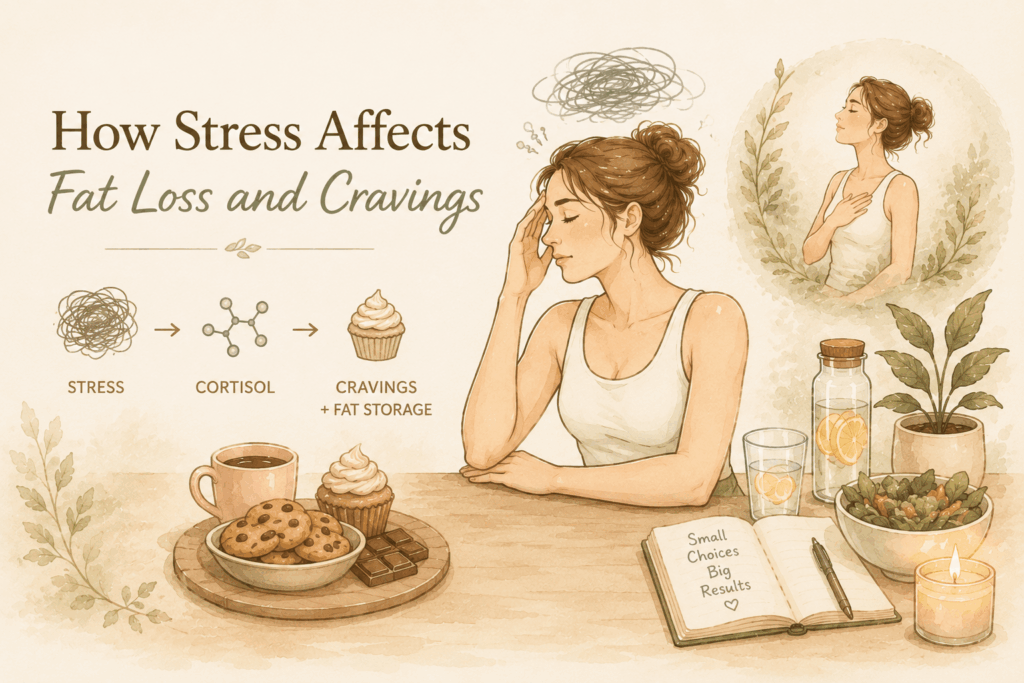
Stress hormones like cortisol influence appetite and increase the brain’s focus on fast, rewarding sources of energy- especially foods high in sugar, salt, and fat.
That is why stressful days often lead to cravings for:
- sweets and chocolate
- fast food
- chips and salty snacks
- large portions late in the evening
- processed comfort foods
These foods stimulate reward pathways in the brain and temporarily reduce emotional tension.
That is why emotional eating can feel almost automatic. The brain starts associating certain foods with:
- relief
- comfort
- distraction
- emotional regulation
And the more often this pattern repeats, the stronger the connection becomes.
This is also why cravings during stress rarely focus on simple foods like vegetables or lean protein. The brain usually looks for foods that create the strongest reward response in the shortest amount of time.
Why Cravings Feel So Hard to Control
Cravings are often misunderstood.
People tend to treat them as weakness or lack of discipline. But in many cases, cravings are the brain’s response to stress, fatigue, overstimulation, or emotional overload.
After mentally exhausting days, the brain naturally starts looking for relief that feels fast, comforting, rewarding and familiar.
This is why cravings often appear:
- after stressful workdays
- late at night
- after emotional tension
- during periods of anxiety or frustration
- when energy levels suddenly crash
And interestingly, the brain rarely craves simple foods in those moments. It usually looks for foods that create the strongest reward response:
- chocolate
- chips
- pizza
- ice cream
- fast food
- sugary snacks
These foods activate dopamine and reward pathways very quickly, which temporarily reduces emotional tension and creates a short feeling of comfort. This is one reason stress eating can feel automatic.
At the same time, chronic stress increases mental fatigue and reduces activity in areas of the brain connected to planning, impulse control, and long-term decision-making.
In simple words: The more mentally overloaded the brain becomes, the harder it gets to pause and make intentional food decisions.
This is also why cravings become stronger when:
- meals are skipped
- stress stays high for long periods
- sleep is poor
- the body is under heavy restriction
We explored this deeper in What Your Food Cravings Are Trying to Tell You , where we explain why certain foods become much harder to resist under pressure.
Why Restrictive Diets Often Backfire During Stress
This is where many fat loss plans start failing. Stress already increases pressure on the nervous system.
Extreme dieting adds even more.
Very low-calorie diets, strict food rules, and aggressive restriction may work briefly, but they often increase cravings even further. The body starts sensing:
- low energy availability
- psychological pressure
- constant food focus
And that combination can trigger:
- binge eating
- strong cravings
- emotional eating episodes
- loss of control around food
This is why sustainable fat loss usually works better with calmer, more balanced routines instead of extreme restriction.
How to Recognize Stress-Driven Eating
One of the biggest problems with stress eating is that it often happens without full awareness.
Physical hunger usually builds gradually. Stress-driven eating feels different. It often appears suddenly and feels urgent:
- “I need something sweet right now”
- “I just want to snack on something”
- “I deserve food after this day”
- “I need comfort”
In many cases, the craving is not coming from the stomach. It is coming from mental exhaustion, emotional overload, boredom, frustration, or the need for relief after long periods of stress.
This is also why stress eating often happens:
- late at night
- while watching something
- after emotionally difficult situations
- during work breaks
- after mentally draining days
The brain starts associating food with relaxation and emotional recovery. And once that pattern repeats enough times, the response becomes automatic.
The important part is recognizing the difference between physical hunger and emotional overload. Sometimes the body truly needs food. Other times, the nervous system simply needs regulation. This is why short movement breaks, walking, stepping outside briefly, stretching, or interrupting the stressful environment can sometimes reduce cravings surprisingly fast.
As explored in Why Action Reduces Anxiety and Builds Confidence , movement often helps the brain regulate stress more effectively than staying mentally stuck in it.
Practical Ways to Reduce Stress-Driven Eating
The goal is not perfection. The goal is reducing the situations where stress automatically drives food decisions.
Several small changes can help:
- eat enough protein during the day to improve satiety
- avoid skipping meals and becoming overly hungry
- keep easier, less processed foods available at home
- walk or move briefly during stressful periods
- reduce all-or-nothing thinking around food
- pause briefly before reacting to cravings automatically
This does not eliminate stress completely. But it helps reduce how strongly stress controls eating behavior.
Stress Does Not Mean Failure
This part is important. Periods of stress do not mean you are failing. They simply change how the brain and body behave.
Understanding that changes the entire perspective on fat loss. Instead of constantly fighting yourself, you begin working with your physiology more intelligently. And that usually creates far more stability than relying on pressure, guilt, or extreme control.
Frequently Asked Questions
Can stress really slow down fat loss?
Yes. Stress can influence appetite, cravings, eating behavior, energy levels, and food choices, all of which affect fat loss over time.
Why do I crave unhealthy food when stressed?
Stress increases the brain’s focus on fast, rewarding sources of energy and comfort, especially foods high in sugar, fat, and salt.
Is emotional eating normal?
Yes. Emotional eating is a common stress response. Food temporarily activates reward pathways in the brain and helps reduce emotional tension.
Can walking help reduce cravings?
In many cases, yes. Walking and light movement can reduce stress levels, improve mental clarity, and interrupt automatic eating patterns.
What helps most during stressful periods?
Simple routines usually work best: regular meals, movement, hydration, lower food restriction, and reducing unnecessary pressure around eating.