How Long It Really Takes to See Fitness Results
How long does it really take to see fitness results?
This is one of the first questions people ask when they start working out, eating better, walking more, or following a new fitness plan.
And it is completely normal. When you make effort, you want to know when that effort will finally show.
But fitness results do not usually appear all at once. Some changes happen quickly, but you feel them before you see them. Other changes take longer, especially the visible ones.
This is where many people get discouraged too early. They expect the mirror or the scale to change immediately, while the body is already adapting in ways that are not always visible yet.
What You May Notice in the First Week
During the first few days, visible changes are usually minimal.
That does not mean nothing is happening. In the first week, people begin noticing smaller changes like:
- slightly better energy
- better circulation
- less stiffness
- lighter digestion
- better mood after movement
- feeling more aware of their body
These changes are often the first signs that the body is responding to movement, better food choices, hydration, and a more active routine.
At this stage, do not expect a complete visual transformation.
Instead, ask yourself:
- Do I feel slightly better after moving?
- Do I have a little more energy during the day?
- Do I feel less heavy after meals?
- Am I moving more than before?
Those are early results too.
What Usually Changes After 2–4 Weeks
Persistence matters. If you keep following your plan and making healthier choices for 2–4 weeks without giving up, this is often when progress starts becoming easier to notice.
You may notice that:
- workouts feel slightly easier
- you need fewer breaks
- walking feels more natural
- your body feels less stiff
- you recover faster after movement
- your daily energy feels more stable
- your clothes fit differently than before
- you feel more confident
- your posture may feel better
This is often the stage where people begin realizing that something is actually changing, even if the mirror does not show dramatic results yet.
If you are doing short home workouts, this is often when consistency starts feeling more realistic.
We explored this further in The Most Effective Short Home Workouts , where shorter sessions can make movement easier to repeat without feeling overwhelming.
Why the Scale Can Be Misleading in the Beginning
The scale is one of the most frustrating tools, especially in the beginning. Some days it moves down. Some days it does not move at all. And sometimes it even goes up, even when you are doing many things right.
This happens because body weight can change from day to day because of:
- water retention
- salt intake
- carbohydrate intake
- hormonal changes
- meal timing
- digestion
- poor sleep
- stress
This is one reason daily weigh-ins can become mentally exhausting.
A better approach is to look at weekly trends, not daily numbers.
And if you choose to weigh yourself, try to do it under similar conditions each time — for example, in the morning, before breakfast, and after using the bathroom.
This will never make the scale perfect, but it can make the numbers more consistent.
Also, the scale does not show everything.
It does not show better endurance, improved strength, reduced bloating, better posture, or the fact that your clothes may already fit differently.
That is why progress should never be measured by weight alone.
Take a Photo Before You Start
One practical thing many people forget is taking a starting photo. It may seem unnecessary at first, but it can become one of the easiest ways to track your progress later.
In the beginning, it may feel uncomfortable. But after several weeks, those photos often become much more useful than people expect.
The mirror can be misleading because you see yourself every day. Small changes are easy to miss when they happen gradually.
A simple progress photo allows you to compare more objectively and notice changes that might otherwise go unnoticed.
You do not need anything complicated:
- take one photo from the front
- one from the side
- use the same lighting
- wear similar clothes
- repeat every 3–4 weeks
Do not take photos every day. That usually creates more pressure than clarity.
Monthly comparisons are often much more useful and make it easier to see how far you have actually come.
How to Track Progress Without Becoming Obsessed
Tracking can help, but it should not make the process stressful. You do not need complicated apps or detailed spreadsheets.
A simple system is enough.
You can track:
- completed workouts
- daily steps
- how your clothes fit
- energy levels
- sleep quality
- monthly photos
- waist or hip measurements once per month
This gives you a more complete picture than the scale alone.
For example, if your weight stays the same, but your clothes fit better, your endurance improves, and you feel less bloated, that is still progress.
Many changes happen before they become obvious in the mirror.
What Actually Helps You See Results Faster
The answer is NOT starvation or extreme workouts. Trying to force faster results usually creates more stress, more cravings, more exhaustion, and a higher chance of quitting.
What helps more is doing the simple things consistently:
- regular movement
- short workouts you can repeat
- walking more during the day
- eating slightly lighter and more balanced meals
- drinking enough water
- sleeping better
- reducing alcohol and constant snacking
- not disappearing from your routine after one missed day
Yes, this may sound less exciting than a “quick transformation,” but it works much better in real life.
For people who want a clearer structure, the 30-Day Home Transformation Program combines realistic home workouts, daily movement, and simple routines designed to help progress feel manageable instead of overwhelming.
Why Results Feel Slow at First
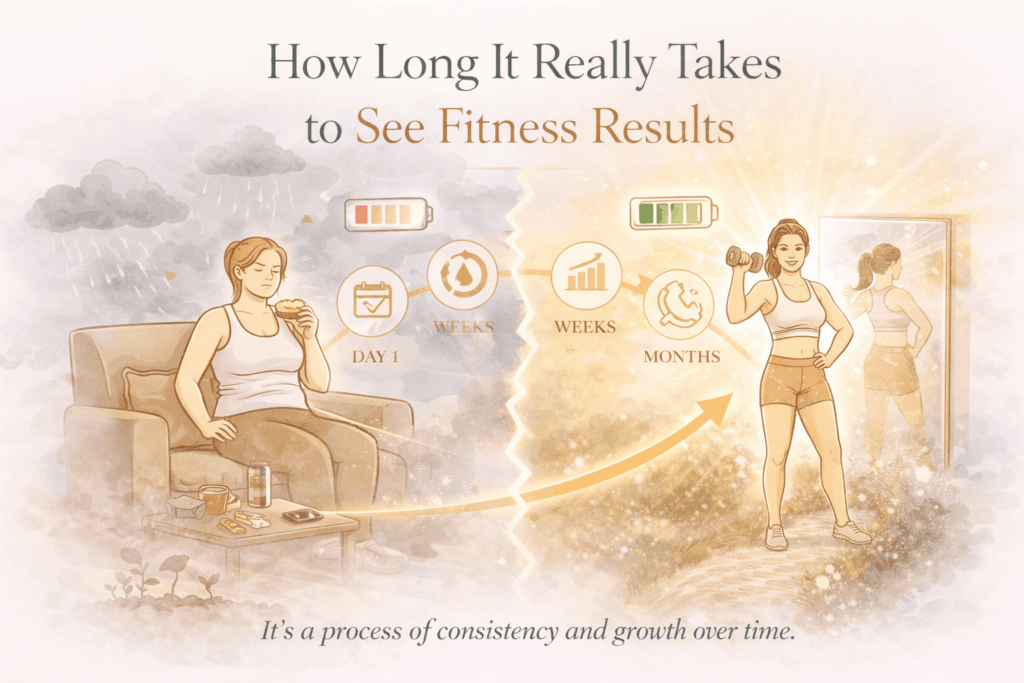
Results often feel slow because people expect the visible part to happen first. But the body changes in a different order.
First, you may feel better. Then movement starts feeling easier. Your energy becomes more stable. Then clothes start fitting differently.
And only after that, visible changes usually become easier to notice.
The biggest mistake you can do is quitting during the stage where progress is happening, but not yet obvious. If you are only looking for visible changes, you may miss many of the improvements already happening.
Fitness results do not happen overnight. But they also do not take forever. Your body starts responding from the moment you begin. You just do not always see it immediately.
Better energy, stronger movement, improved endurance, better sleep, and more daily activity are often the first signs that your body is moving in the right direction.
Visible results just arrive later.
Frequently Asked Questions
How long does it take to see fitness results?
Many people feel small changes within the first 1–2 weeks, such as better energy or easier movement. Visible results usually begin appearing after 3–6 weeks of consistent effort.
Why do I feel better before I see results?
Because internal changes usually happen first. Better circulation, improved energy, better movement control, and improved endurance often appear before visible body changes.
Why is the scale not changing even though I am working out?
Body weight can fluctuate because of water retention, salt intake, digestion, hormones, stress, and sleep. The scale does not always show changes in strength, endurance, bloating, or how your clothes fit.
Should I weigh myself every day?
Daily weighing can be frustrating because body weight changes naturally from day to day. Weekly trends are usually more useful than daily numbers.
What is the first sign that my fitness is improving?
Often, the first signs are better energy, less stiffness, easier movement, improved endurance, and needing fewer breaks during activity.
Can short home workouts really produce results?
Yes. Short home workouts can produce results when done consistently, especially when combined with walking, better eating habits, hydration, and recovery.
How can I see results faster without extreme dieting?
Focus on repeatable habits: regular movement, simple workouts, enough water, better sleep, lighter meals, fewer snacks, and reducing alcohol. Extreme approaches usually make consistency harder.