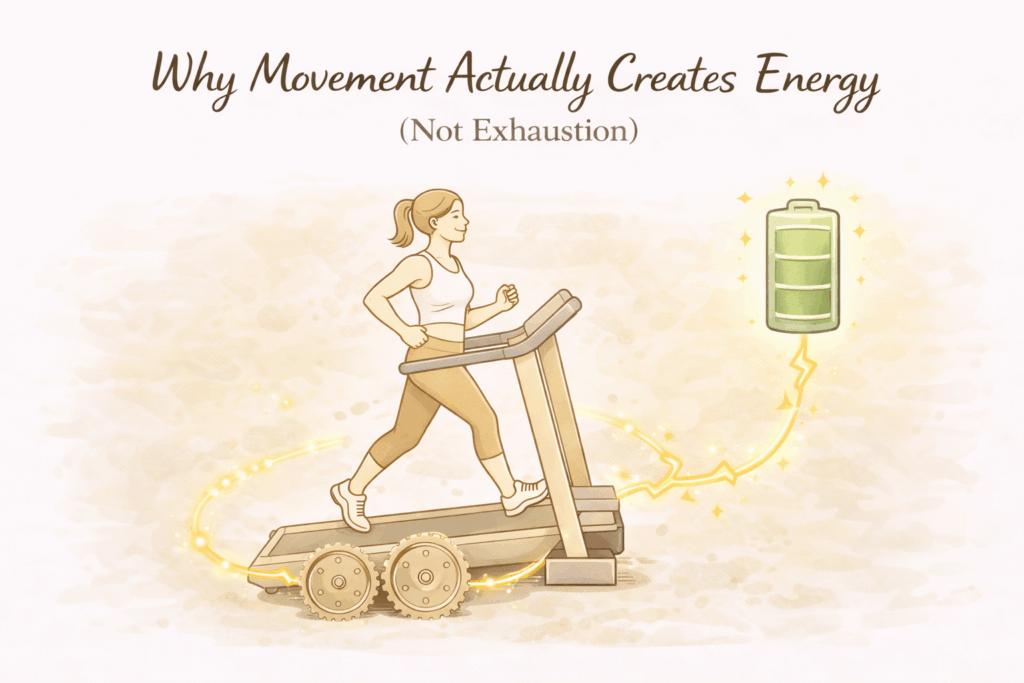
Why Movement Actually Creates Energy (Not Exhaustion)
Have you ever skipped a workout because you felt too tired to start?
If you often feel too tired to work out or stay active, this is one of the most important concepts to understand.
It seems logical to wait until you have more energy. The thought is simple: “I’m exhausted today. I’ll exercise when I feel better.” But the human body often works the opposite way. In many cases, energy is not something you wait for, it is something you create through movement.
This is one of the biggest paradoxes of modern lifestyles. The less we move, the more tired we tend to feel.
The Energy Paradox
At first glance, it seems logical that physical activity should make us more tired. After all, movement requires effort and energy.
Yet the human body is built to function through regular movement. When activity levels drop for long periods of time, circulation slows, muscles remain inactive, and the nervous system shifts into a lower-energy state.
Research in physiology shows that prolonged sitting can reduce blood flow and oxygen delivery to muscles and the brain. This often contributes to the sluggish, heavy feeling people experience after hours of inactivity.
Movement quickly reverses this effect. Even light activity stimulates circulation, increases oxygen flow, and activates the nervous system. This is why a short walk, a few minutes of stretching, or a light workout can often leave you feeling more refreshed rather than more exhausted. The body responds rapidly when movement resumes.
Movement Activates the Brain and Nervous System
Another reason movement increases energy is its effect on the brain and nervous system. When you start moving, the body releases several chemicals that influence alertness, mood, and mental focus. Light physical activity stimulates the release of neurotransmitters such as dopamine, serotonin, and endorphins- substances that help regulate motivation, mood, and perceived energy levels.
This is why a short walk or a few minutes of movement can quickly improve mental clarity. The brain receives a signal that the body is active, which shifts the nervous system into a more alert and responsive state.
In simple terms, movement does not only activate muscles. It also helps “switch on” the brain.
Why Sitting Too Much Can Drain Your Energy
Modern routines often involve long hours of sitting- at a desk, in a car, or in front of a screen. While sitting may feel restful, extended inactivity can actually contribute to fatigue.
When the body remains still for long periods, muscles are barely activated and circulation slows. This often leads to the sluggish, heavy feeling people experience in the afternoon.
For example, after several hours at a desk, it’s common to feel mentally drained and physically heavy. A short walk or a few minutes of movement can quickly change that state. Ironically, the instinct to stay still when tired often makes the situation worse.
Short Movement Breaks Can Reset the Body
The good news is that restoring energy does not require long or intense workouts. Even short periods of movement can have a noticeable effect. A five-minute stretch, a short walk around the block, or a quick mobility routine can help reactivate circulation and bring the body out of its low-energy state.
In practice, this means you don’t need long workouts to feel the effect. Even a short 10–20 minute home session can increase circulation, activate muscles, and improve how you feel within minutes.
This is why shorter, structured workouts are often easier to follow and more effective in daily life. And one of the reasons why short workouts can be surprisingly effective. If you are curious about how brief training sessions work, you may enjoy reading Micro Workouts: Do They Really Work?
Even a simple walk can help restore mental clarity and improve mood. We explored this in more detail in Why Walking Is One of the Most Powerful Fat Loss Tools.
Energy Is a System
Energy does not depend on a single factor. It is the result of several systems working together: sleep quality, nutrition, stress levels, and daily movement.
For example, poor sleep can make even a simple workout feel exhausting. Long periods of sitting can reduce circulation and lead to the heavy, sluggish feeling many people experience in the afternoon. Irregular meals can cause unstable energy levels throughout the day.
Movement interacts with all of these factors. A short walk after long hours at a desk can restore circulation. Light exercise can help regulate stress hormones. Even brief activity during the day can improve sleep quality later at night.
When movement becomes a regular part of daily life, energy levels often begin to stabilize. People tend to feel less sluggish, more alert, and more capable of maintaining healthy routines. This is why small, repeatable habits often produce better long-term results than occasional bursts of extreme effort.
Start Small and Let Energy Build
The key is not to wait until you feel energized before moving. Instead, use movement to create energy.
Start with something simple:
- a short walk
- a few minutes of stretching
- a 10–20 minute home workout
These small actions can quickly shift your physical and mental state. Once you begin, it becomes easier to continue.
If you want a simple structure that helps you stay active even on low-energy days, you can explore the 30-Day Home Weight Loss Program.
Frequently Asked Questions
Should I work out if I feel tired?
In many cases, light movement can actually increase energy. The key is to start with something small and manageable.
What type of movement is best when I feel low on energy?
Walking, stretching, or short low-intensity workouts are often the best way to restart your energy.
How long should a workout be to feel the effect?
Even 10–20 minutes can improve circulation, mood, and mental clarity.