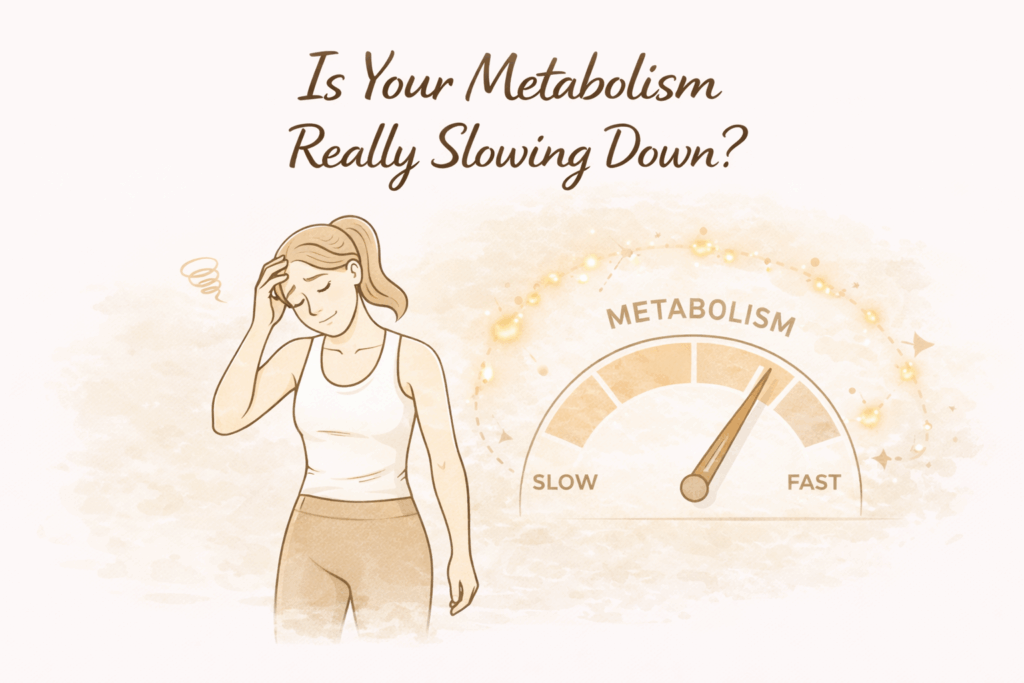
Is Your Metabolism Really Slowing Down?
Have you ever wondered whether your metabolism is slowing down, or if something else is affecting your energy and weight?
Metabolism is often blamed when weight loss slows or when energy levels begin to fluctuate. But the explanation is rarely as simple as a “slow metabolism.” In many cases, the body is simply adapting to habits, routines, and environmental factors that influence how efficiently energy is used.
Understanding how metabolism works can make it much easier to support your body instead of fighting against it.
What Metabolism Actually Means
Metabolism is the collection of processes in your body that convert food and stored fat into energy. These processes support everything from breathing and digestion to movement and recovery.
Even when you are resting, your body is constantly using energy to maintain vital functions. This is often called your resting metabolic rate- the energy required just to keep the body functioning normally.
How efficiently your metabolism works is influenced by the way you live each day. How well you sleep. How much you move. The level of stress you carry. And of course the quality and quantity of the food you eat.
Why Energy Levels Sometimes Drop
When energy drops or progress slows down, metabolism is often blamed. In most cases, however, the body is simply responding to everyday habits that shape how efficiently energy is used.
- Irregular sleep patterns
- Long periods of sitting or low movement
- High stress levels
- Highly processed foods and unstable energy intake
- Insufficient hydration
When these factors accumulate, the body may begin conserving energy more carefully. This can feel like a “slow metabolism,” even though the system is simply adapting to its environment.
The Body Is Designed to Adapt
One of the most important characteristics of the human body is adaptability. When routines remain unchanged for long periods, the body becomes more efficient at handling them.
This means that the same workouts, the same movement patterns, or the same eating habits may eventually produce smaller changes than they once did.
Rather than indicating a broken metabolism, this usually reflects a normal adaptation process. The body has simply adjusted to the current level of demand.
Your Metabolism Responds to Activity
One of the most powerful signals for metabolism is movement. The human body is designed to adjust its energy use based on how active it needs to be.
When daily activity is low for long periods, the body naturally becomes more conservative with energy. This can feel like a slower metabolism, even though the system is simply adapting to a lower demand.
The opposite is also true. When the body receives regular signals to move- walking, stretching, short workouts or everyday activity, metabolic processes tend to become more active again.
This is one reason even brief sessions of movement can have a meaningful impact. If you are curious how short workouts can support energy and fitness, you may enjoy reading Micro Workouts: Do They Really Work?.
Your Body Is Designed to Use Different Energy Sources
The human body is remarkably flexible when it comes to energy. It can use carbohydrates from recent meals, stored glycogen in the muscles, and even fat reserves when needed.
When daily habits become very predictable — long sitting hours, irregular meals, low movement- this flexibility can decrease. Energy levels may start to fluctuate, and the body may rely on fewer energy pathways.
Restoring metabolic flexibility usually does not require extreme interventions. Regular movement, balanced meals and stable routines help the body return to a more efficient rhythm.
If you prefer a structured approach that combines movement, simple routines and gradual progress, the 30-Day Home Weight Loss Program offers a practical framework for rebuilding sustainable habits.
A Different Way to Think About Metabolism
Instead of asking whether your metabolism is slowing down, it may be more useful to ask a different question: what conditions is your body adapting to right now?
The human body is constantly responding to the signals it receives every day- how much you move, how well you sleep, how regularly you eat, and how much stress you carry. Over time, these signals shape how efficiently your system manages energy.
When movement becomes regular, sleep improves and daily routines stabilize, the body often responds with higher energy, better recovery and steadier progress. Not because metabolism suddenly “speeds up,” but because the environment around it becomes more supportive.
Seen this way, metabolism is not something that suddenly breaks or stops working. It is a responsive system that adapts to the way you live.
And in most cases, improving that system does not require extreme changes- only small adjustments repeated often enough for the body to recognize them as the new normal.
In most cases, metabolism is not the problem. It is simply responding to the signals it receives every day.