Why You Feel More Motivated After You Start (Not Before)
Have you ever waited to “feel motivated” before starting a workout, only to keep waiting?
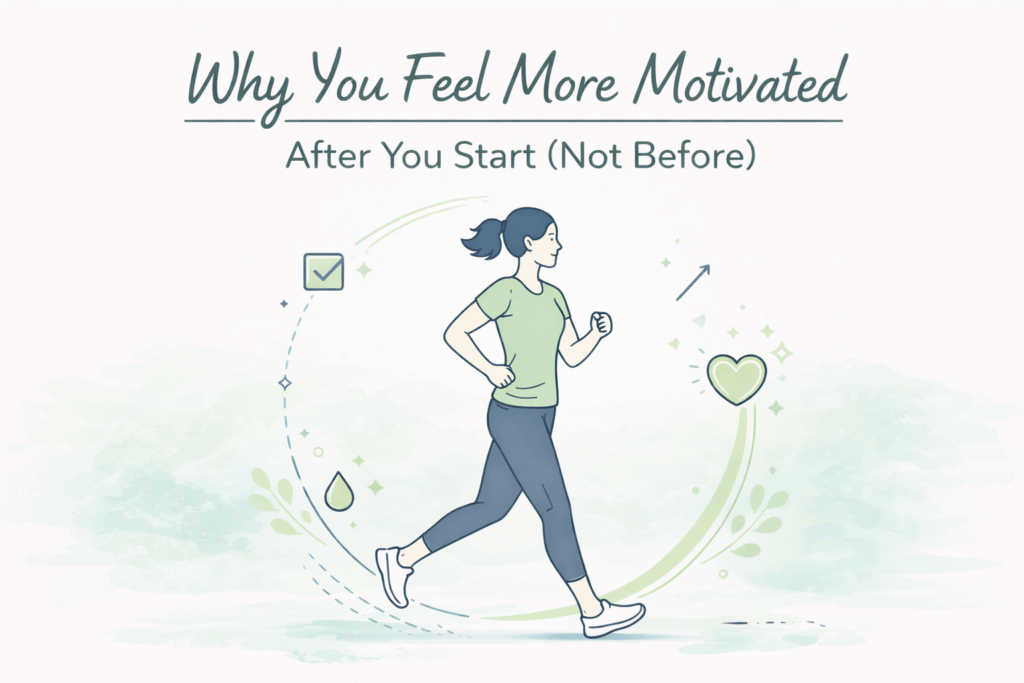
Most people believe motivation must come first. But motivation is often a result of action, not a requirement for it. The shift happens after you begin- not before.
Understanding this simple principle can change how you approach consistency forever.
Motivation Is Not a Prerequisite
Motivation feels like energy. But biologically, it is often a response- not a trigger. Your brain releases dopamine not only when you achieve something, but when you move toward a goal.
That means the act of starting creates momentum. The anticipation of progress generates motivation.
Waiting for motivation before acting reverses the natural sequence.
Action Reduces Resistance
Before you begin, your brain perceives effort. After you begin, your brain shifts into execution mode.
This is why the hardest part is often the first few minutes. Once movement starts, mental friction decreases. The nervous system adapts quickly to ongoing activity.
As explained in Why Your Brain Resists Change, resistance is strongest before exposure.
The Dopamine Effect
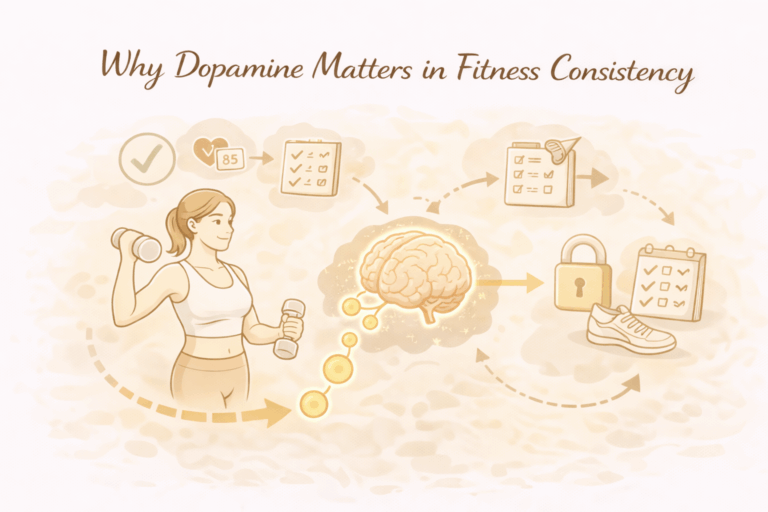
Neuroscience research shows that dopamine increases not only from reward, but from forward motion toward a goal. Small progress signals to your brain that advancement is happening.
This creates a reinforcing cycle. You act, you see progress, you feel motivated, and you want to continue.
This is also why small daily habits are so powerful. They lower the barrier to starting.
Why Waiting Makes It Harder
When you delay action, the task often feels larger than it is. The brain amplifies uncertainty and anticipates effort.
But once you begin, the imagined difficulty rarely matches reality.
Momentum is psychological. It builds from movement, not intention.
Start Smaller Than You Think
On low-energy days, do less — but still begin. A five-minute session can shift your state more effectively than waiting for perfect conditions.
Consistency does not require intensity. It requires continuity.
This principle connects directly to why consistency matters more than intensity.
Action Creates Motivation
Motivation is not a magical spark that appears from nowhere. It is often the result of forward motion.
When you begin, your brain receives evidence of progress. That evidence changes how you feel.
So next time you don’t feel motivated, don’t wait. Start small. Let action create the motivation you were looking for.