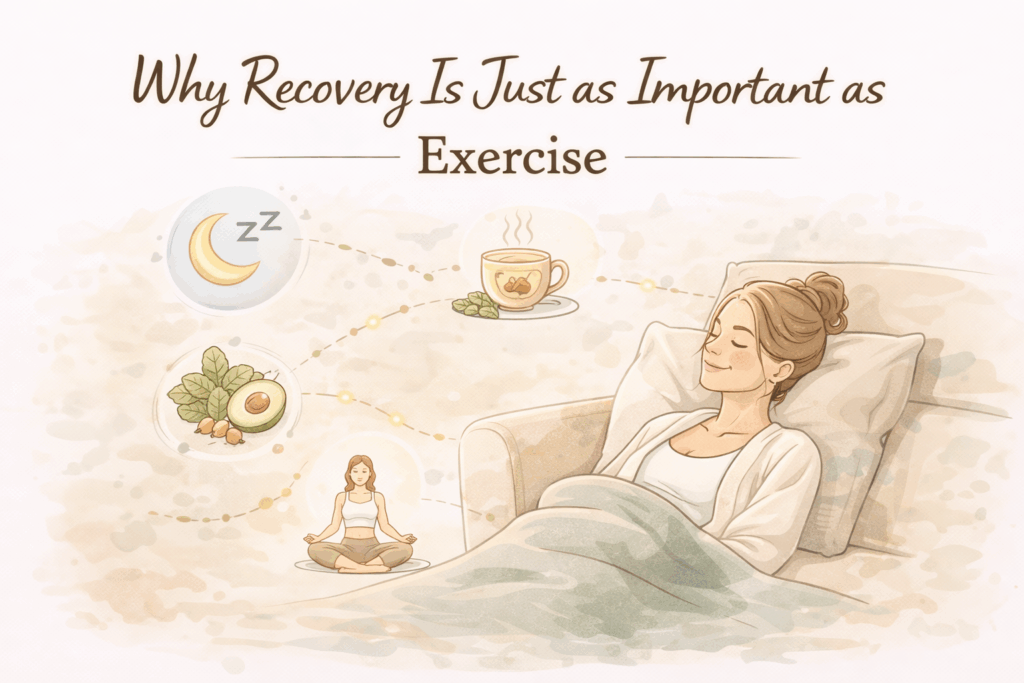
Why Recovery Is Just as Important as Exercise
What if the reason you feel tired, sore, or stuck in your progress is not your workout… but your recovery?
In fitness, effort often receives all the attention. Workouts are planned, exercises are counted, and progress is measured through intensity.
Yet the real transformation does not happen during the workout itself. It happens afterwards, when the body repairs, rebuilds, and adapts. Without proper recovery, even the best training plan can lead to fatigue, slower progress, and increased risk of injury.
What Recovery Actually Means
Recovery is often misunderstood as simply “doing nothing.” Actually, it is an active biological process. During recovery, the body restores energy, repairs muscle tissue, and rebalances the nervous system after physical effort.
Put simply, recovery is when your body does its repair work.
Several factors contribute to effective recovery:
- quality sleep
- balanced nutrition
- hydration
- low-intensity movement
- managing daily stress
When these elements work together, the body becomes stronger and more resilient.
Why Recovery Is Essential for Fitness Results
Exercise creates a stimulus. Recovery is what allows your body to respond to that stimulus.
Without recovery, the body stays in a stressed state. Muscles do not fully rebuild, energy systems are not restored, and performance may begin to decline. With proper recovery, the body adapts. Strength improves, energy increases, and movement becomes easier.
This is why recovery is not separate from training- it is part of it.
The Role of Sleep in Physical Recovery
Sleep is one of the most important recovery tools the body has.
During deep sleep, the body performs many of its most important repair processes. Growth hormone is released, muscle tissue begins to rebuild, and energy systems are restored.
Research in sleep physiology shows that much of muscle recovery and tissue repair occurs during deep sleep stages. This is also when the body replenishes glycogen stores, which are essential for strength and endurance in your next workout.
When sleep is limited, physical performance often drops. Strength decreases, reaction time slows, and workouts feel more difficult.
In simple terms, sleep prepares your body to move again.
Active Recovery Supports the Body
Recovery does not always mean complete rest. In many cases, light movement helps the body recover more efficiently.
Activities such as walking, stretching, or mobility work increase circulation and help deliver oxygen and nutrients to muscles. This supports the repair process without adding additional stress.
Even a short walk can support recovery while keeping the body active. You can explore this further in Why Walking Is One of the Most Powerful Fat Loss Tools.
Why Too Much Training Can Slow You Down
It may seem that more training leads to better results. But the body does not work that way. Without enough recovery, fatigue accumulates. Energy levels drop, and workouts begin to feel harder instead of easier.
This can lead to:
- reduced performance
- persistent soreness
- lower motivation
- increased risk of injury
This is why structured programs include recovery periods.
In both the 30 Day Transformation Program and the Next 30 Days program, certain days are designed specifically for recovery.
These days include lighter movement, mobility work, or simple activities like walking. The goal is not to stop moving, but to support the body’s ability to recover.
Balance Creates Long-Term Results
Fitness is not only about effort. It is about balance between effort and recovery. When training, rest, and daily habits support each other, the body adapts more efficiently.
Energy levels become more stable. Workouts feel more sustainable. Progress becomes easier to maintain. Improving recovery habits can often have as much impact on results as improving the workout itself.
How to Support Recovery in Daily Life
You don’t need complex strategies. Start with simple actions:
- get enough sleep
- stay hydrated
- include light movement on rest days
- avoid pushing to exhaustion every day
These small changes help your body recover and prepare for your next session.
Frequently Asked Questions
Do I need rest days if I work out at home?
Yes. Even short workouts require recovery. Rest days help your body adapt and prevent fatigue.
What is active recovery?
Active recovery includes light movement such as walking, stretching, or mobility work that supports recovery without adding stress.
Can too much exercise slow progress?
Yes. Without enough recovery, performance can drop and the risk of injury increases.